Every October the same thing happens. The heating goes on, the wind picks up, scarves come out of storage, and somewhere in the middle of all that your beard turns from soft and tidy into a dry, itchy, flaky mess. At the same time, social media is busy handing out “beard hacks” that sound clever and then make the problem worse.
This autumn, one of those hacks went properly viral: spray your perfume straight onto your beard so you smell good all day. It got thousands of likes, and it also got a wave of pushback from bearded men who know what alcohol does to hair and skin.
So let’s use that debate as a starting point. Below is a full autumn beard-care reset: what the fragrance argument is really about, why your beard feels worse in cold weather, what dermatologists say about beard itch and “beardruff”, how to choose between oil and balm, and how to get ready for Movember. We finish with a few products that are actually worth your money.
The Viral “Perfume on Your Beard” Tip, and Why People Pushed Back
In early October, a post on X told men with long hair or beards to spray perfume directly on them, promising they would “thank me later”. It travelled far, passing 100,000 views and gathering thousands of likes.
The replies were less enthusiastic. One of the most shared responses made a simple point: most fine fragrances are alcohol-based, and spraying alcohol onto facial hair and the skin under it strips away natural oils. The result, that reply argued, is dryness, brittle hairs and flaky skin. In other words, the very “beard dandruff” many men are trying to get rid of.
Original article: X post recommending perfume on beards
Original article: X reply on alcohol drying out facial hair
What dermatologists say about fragrance and irritation
The American Academy of Dermatology (AAD) does not talk about perfume on beards specifically, but its general advice for men is clear. If you have sensitive skin, pick mild, fragrance-free products, because fragrance can leave skin feeling irritated and dry. The AAD also warns that products labelled “unscented” can still contain masking fragrances, so “fragrance-free” is the wording to look for.
Original article: AAD – Skin care tips for men
A smarter way to smell good
You don’t have to choose between a nice scent and a healthy beard. A few simple swaps:
- Spray fragrance on clothing or on your neck and chest, not into the beard itself.
- Let your beard oil carry the scent. Many beard oils are lightly scented with carrier oils plus essential oils, so the beard smells pleasant without a hit of alcohol.
- Go fragrance-free if your skin reacts. If you get redness, itch or flakes, an unscented or fragrance-free oil is the safer choice.
- Wash your beard properly. A clean beard with no food, smoke or sweat in it smells better than any perfume can make it smell.
Why Your Beard Feels Worse Every Autumn
Cold air outside and dry heated air inside are a double hit for the skin under your beard. Barbers and beard-care brands describe the same pattern: oil alone may feel fine at breakfast, but by lunchtime the beard feels dry again. Scarves and collars add friction and crush the shape, and longer beards and curly beards tend to be drier because the skin’s natural oils struggle to travel along the hair.
The key thing to understand is that most “beard itch” isn’t really about the hair. It’s about the skin underneath. Keep that skin comfortable and the beard on top looks and feels better.
Original article: Jonny the Barber – Beard Oil vs Beard Balm
The Dermatologist’s Three-Step Beard Routine
The AAD asked board-certified dermatologist Dr. Anthony Rossi for a simple beard routine. It comes down to three steps.
Step 1: Wash your face and beard
Washing removes dirt, oil, germs, pollution and dead skin cells that build up on both the beard and the skin. Left alone, they can clog pores and irritate the skin. The advice is to use a gentle cleanser made for your skin type rather than a harsh bar soap:
- Oily or acne-prone skin: a gel cleanser with salicylic or glycolic acid, labelled “non-comedogenic”.
- Normal skin: a non-comedogenic cleanser.
- Dry skin: a hydrating, fragrance-free cleanser.
- Skin that often burns with products: a creamy, soap-free, fragrance-free cleanser made for sensitive skin.
Massage it into the beard and skin in circles, rinse with lukewarm water, then pat dry and leave the skin slightly damp.
Step 2: Moisturize, even if you have oily skin
This is the step most men skip, and it’s the one that stops the flakes. Which moisturizer you use depends on your skin and beard length:
- Stubble phase: a moisturizer with SPF 30 or higher, plus a gentle exfoliating scrub once or twice a week if you get ingrown hairs.
- Full beard, acne-prone skin: beard conditioner.
- Full beard, normal to dry skin: beard oil.
- Full beard, sensitive skin: a fragrance-free, non-comedogenic moisturizer.
Apply it straight after washing, work it into both skin and hair, and use oil or conditioner sparingly. You can always add more.
Step 3: Groom with a comb
Use a beard comb to spread product evenly, detangle (easier when the beard is wet), and shape. When trimming, the AAD suggests using a shaving oil, cream or gel and an electric trimmer, or scissors for longer beards.
The bonus tip nobody wants to hear
Stop touching and stroking your beard. Your hands carry germs and dirt, and constant stroking moves them straight onto the skin under your beard.
Original article: AAD – A dermatologist’s top tips for a healthy beard
“Beardruff”: When the Flakes Aren’t Just Dry Skin
Sometimes the flakes don’t come from simple dryness. If you see white or yellowish flakes along with an itchy rash, scaly skin or greasy patches under your beard, it may be dandruff of the beard area. Its medical name is seborrheic dermatitis, and the AAD describes it as very common.
The AAD explains that seborrheic dermatitis usually starts on the scalp but can also appear on the eyebrows, ears, sides of the nose and the beard. Unlike plain dandruff, it causes inflammation, which can look like swelling and discolored skin. Many skin conditions cause itchy rashes, so the AAD recommends seeing a board-certified dermatologist for an accurate diagnosis.
Original article: AAD – Seborrheic dermatitis: Overview
The AAD’s three-step DIY approach
In its guide to common beard problems, the AAD shares a three-step approach from dermatologist Dr. Ross Radusky:
- Brush gently every day before you wash your face, to lift the flakes. Brushing too hard can irritate the skin and make things worse.
- Hydrocortisone 1% solution, an over-the-counter product, applied to the skin under the beard. The article describes nightly use for the first week, then once a week when the skin feels scaly.
- Shampoo the beard and scalp at least once a week with a dandruff shampoo containing one of these active ingredients: 2% zinc pyrithione, 1% ketoconazole or 1% selenium sulfide.
The AAD adds that if the rash continues after this, or if you get acne-like breakouts, pain or broken skin under the beard, it’s time to see a dermatologist. Its self-care page also notes that washing the beard area with a 1% ketoconazole shampoo can help reduce flare-ups, and that early treatment helps stop a flare from getting worse.
Original article: AAD – DIY treatment for 5 common beard problems
Original article: AAD – Seborrheic dermatitis: Self-care
Note: This section summarizes publicly available guidance from the American Academy of Dermatology. It is not medical advice. If you have a persistent rash, pain or broken skin, talk to a doctor or board-certified dermatologist.
Beard Oil vs. Beard Balm: The Autumn Answer
This is the question that comes up again and again on beard forums. The simplest way to think about it:
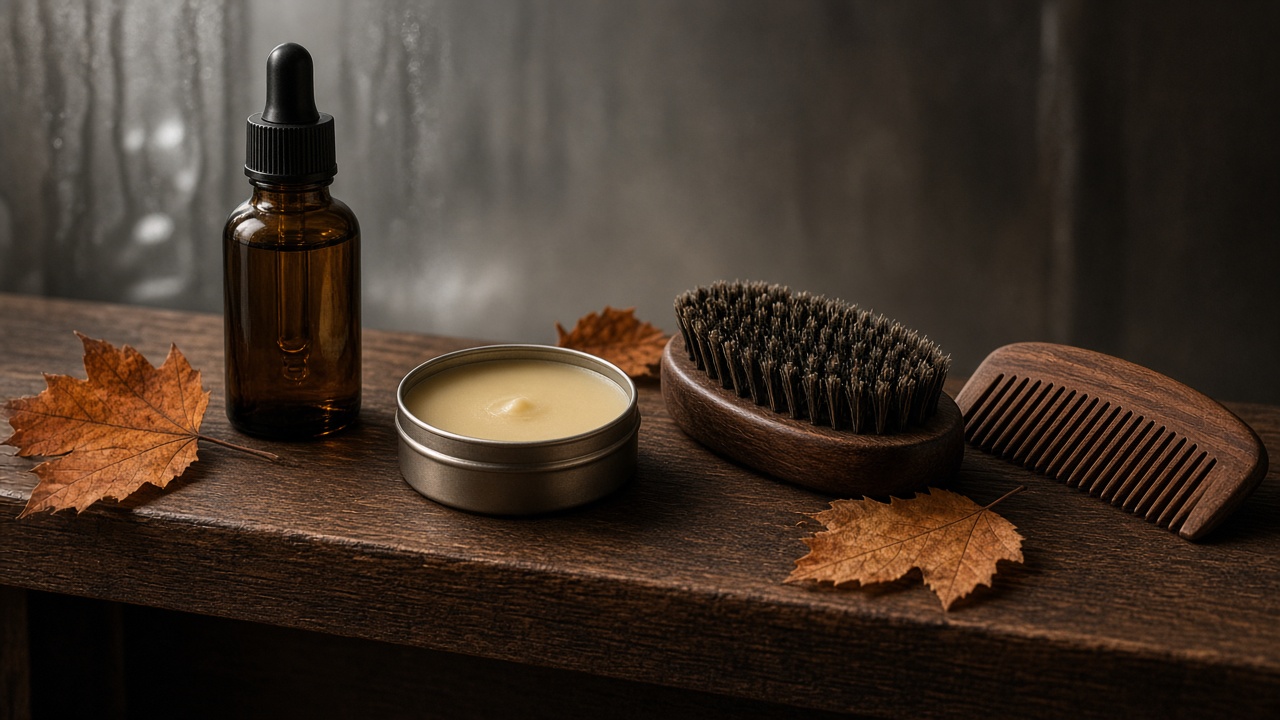
- Beard oil is mainly for the skin. It’s thin, it soaks in, and it softens the hair. If your beard is short, new or itchy, start here.
- Beard balm is mainly for the beard. It contains oils and butters plus wax. The wax gives light hold and forms a light barrier that slows moisture loss.
Why balm doesn’t replace oil
A detailed thread on Reddit’s r/BeardTalk explains the science in plain terms. Balm’s wax adds hold and “occlusion”, a surface barrier that slows water loss. In dry, windy or cold air, that’s a shield. In humid air it can work against you, because hair naturally takes in moisture from the air and the wax blocks that. The thread’s bottom line: balm keeps in the moisture you already have, so it should go on top of oil, not instead of it.
Original article: Reddit r/BeardTalk – Beard Balm: What It Does, What It Doesn’t
A simple cheat sheet
Barber Jonny’s breakdown of the two products sums it up neatly:
- Short beard, itchy skin: oil.
- Medium beard with flyaways: balm, or oil plus a little balm.
- Long beard: oil on the skin, balm on the length.
- Winter: both.
- Wrong shape: neither. Book a trim.
Original article: Jonny the Barber – Beard Oil vs Beard Balm
What Reddit’s Bearded Men Are Saying
Beard communities on Reddit are full of men fighting the same seasonal battle. A few patterns stand out.
“I’ve tried everything and the skin is still flaky.” In one r/beards thread, a Midwest user said that no beard wash, conditioner or lotion had fixed the dry skin under his beard. The most practical replies:
- Use beard oil rather than relying only on balm or lotion, and apply it to a slightly damp beard after washing so it reaches the skin. Jojoba- and argan-based oils came up a lot.
- Washing the beard every day may be stripping natural oils faster than they come back, especially in dry winter air. Several people suggested washing every two to three days.
- If oil plus less washing still doesn’t fix it, put a plain unscented moisturizer on the skin first, then the oil on top.
- A couple of commenters said a dandruff shampoo (or a salicylic acid shampoo) was what finally worked for them, which fits the AAD’s advice above.
Original article: Reddit r/beards – Cannot find a product that works for flaky dry skin under my beard
“I have oily skin, do I really need oil?” Another r/beards user with naturally oily skin had moved from leave-in conditioner to balm but was still getting dry, itchy patches under the mustache and chin. Replies suggested washing less (once a week, in one case), using only a few drops of oil a day, and putting a skin moisturizer on in the shower before the oil. One commenter put it this way: moisturize the skin with a cream, then soften the hair with oil. That’s very close to the dermatologist routine above.
Original article: Reddit r/beards – Is beard oil the only solution for dry, itchy, flaky skin?
The Autumn Beard Routine, Step by Step
Here’s everything above as one simple routine you can actually stick to.
Daily (about 3 minutes)
- Rinse or wash. Use lukewarm water on non-wash days and a gentle cleanser or beard wash on wash days.
- Pat dry and leave it slightly damp.
- Oil the skin. Put a few drops in your palms and work them into the skin under the beard first, then through the length.
- Balm if needed. Use a fingertip-sized amount through the length on cold, windy days or if you have a medium or long beard.
- Comb or brush into shape. Gently.
Weekly
- Dandruff shampoo on the beard (and scalp) if you’re prone to flakes, using one of the AAD-listed active ingredients.
- Gentle exfoliation once or twice a week if you’re in the stubble stage and get ingrown hairs.
- Clean your tools. Rinse combs and brushes, and wash trimmer guards.
Monthly
- Trim or book a barber. Split, frayed ends look and feel drier than they are.
- Check the neckline. When shaving the neck, the AAD suggests shaving in the direction of growth, rinsing the blade after each stroke, and changing blades every 5 to 7 shaves.
Movember Is Two Weeks Away
Autumn beard care has one more deadline: November. Movember asks men to start the month clean-shaven, grow a mustache for 30 days, and use it to raise money and start conversations about men’s health. The charity focuses on men’s mental health and suicide prevention, prostate cancer and testicular cancer. Since 2003, it says it has funded more than 1,320 men’s health projects worldwide.
If you’re a full-beard man, that means a big decision: shave it all off and join in, or support in another way. Movember also offers alternatives, such as its “Move for Mental Health” challenge to run or walk 60 miles during the month, or hosting a fundraising get-together.
If you do shave down, use everything above. Stubble skin needs moisturizer with SPF, gentle exfoliation helps with ingrown hairs, and a little oil will keep the new mustache soft instead of scratchy.
Original article: Movember – Grow a Mo
Product Picks
Prices below were shown on the official brand pages at the time of writing and may change.
1. Honest Amish PURE Unscented Beard Oil (2 oz)
A fragrance-free beard oil is the obvious answer to the perfume debate. It’s good for sensitive skin and lets you wear your cologne on your clothes instead. Honest Amish is a widely sold, budget-friendly beard brand. The trade-off: no scent at all, so it won’t do the “smell good” job for you.
Price: $13.57 – Honest Amish PURE Unscented Beard Oil
2. Honest Amish Beard Balm (2 oz)
A classic wax-based balm for the “oil plus balm” winter combination. It’s useful for medium and long beards that get crushed under scarves. Like any balm, it’s heavier than oil, so start with a small amount and warm it between your palms.
Price: $12.87 – Honest Amish Beard Balm
3. Cremo Boar’s Hair Beard Brush
The AAD’s beardruff routine starts with gentle daily brushing to lift flakes. A boar bristle brush also spreads oil from skin to tip. Go easy, though: brushing too hard can irritate the skin.
Price: $11.99 – Cremo Beard Brush
4. Head & Shoulders Clinical Strength Itch Relief Shampoo
Head & Shoulders lists 1% selenium sulfide as the active ingredient in its Clinical Strength line. That’s one of the three dandruff-shampoo actives named by the AAD for beard dandruff. It’s a shampoo, not a beard wash, so use it once or twice a week on the beard and follow with oil. Price varies by retailer and isn’t shown on the brand page.
Head & Shoulders Clinical Strength Itch Relief Shampoo
5. Nizoral Anti-Dandruff Shampoo (1% ketoconazole)
Nizoral’s over-the-counter shampoo contains 1% ketoconazole, the ingredient the AAD mentions for washing a beard or mustache prone to seborrheic dermatitis. It’s a medicated product, so follow the label. The brand site sends you to retailers rather than listing a price.
Nizoral – The Nizoral Difference
The Bottom Line
Your beard is only as good as the skin underneath it. This autumn, skip the viral perfume trick, wash gently and not too often, oil the skin while it’s still damp, add balm when the weather turns harsh, and treat flakes early with the right shampoo. Do that consistently and you’ll go into Movember, and into winter, with a beard that feels as good as it looks.