A beard has never been just hair. Over the centuries it has signalled wisdom, piety, rebellion, rank, political loyalty and, more recently, style. A Russian tsar taxed beards. Turkish civil servants were long required to shave every day. America’s most famous theme-park company banned beards for decades. Today, a well-groomed beard is common in boardrooms from New York to Istanbul.
Still, not every beard is received the same way. This guide looks at which styles are broadly accepted, which sit at the edge, what research says about beards, trust and hiring, and how norms differ between cultures. Facial hair is personal and often cultural or religious. The goal here is understanding, not judgement.
Key takeaways
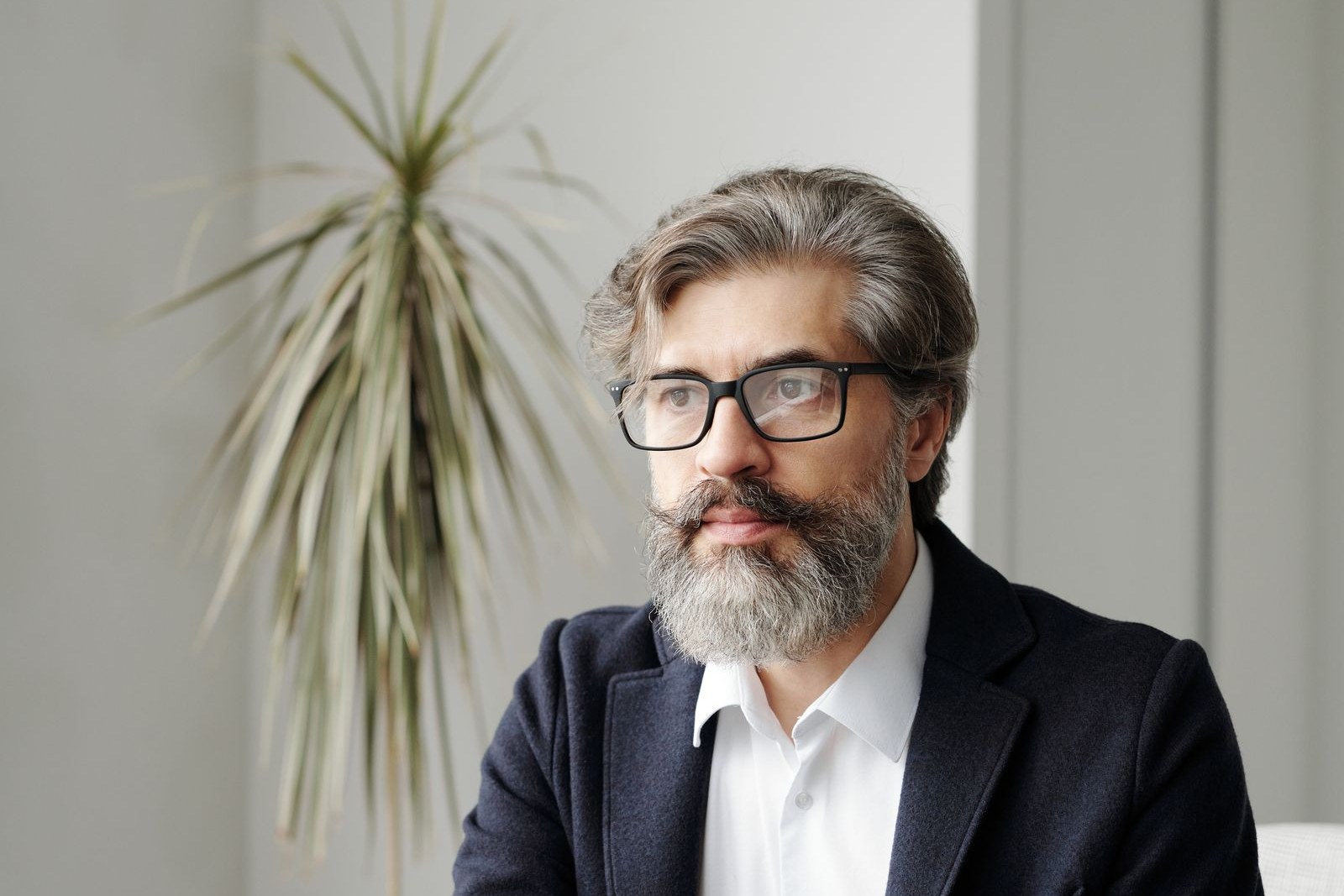
- Broadly accepted today: stubble, the short boxed beard, the corporate beard and a well-groomed full beard with clean lines.
- At the edge of acceptance: very long untrimmed beards, the neckbeard, the chin strap, braided or brightly dyed beards and extreme shapes. Context decides.
- Research is mixed but encouraging: studies have found bearded men rated more trustworthy in some settings, and bearded salespeople seen as having more expertise.
- Grooming matters more than length. Even strict employers such as Disney now allow neat, fully grown, short beards.
- Culture shapes meaning. In Turkey, beards and mustaches have carried political and religious associations, and a court struck down the civil-service no-beard rule in 2022. In much of the Middle East, the beard has religious significance. Europe has swung between beard bans and beard fashions.
The Acceptance Spectrum: From Boardroom to Edge
| Style | Typical perception | Where it works | Grooming key |
|---|---|---|---|
| Stubble (3–5 days) | Relaxed, modern, approachable | Almost everywhere | Even length, clean neckline |
| Short boxed beard | Polished, confident | Corporate, client-facing, formal | Defined cheek line, trimmed sides |
| Corporate beard | Professional, mature | Finance, law, consulting | Short, symmetrical, very neat |
| Well-groomed full beard | Masculine, refined | Creative fields, many offices | Regular shaping, oil, clean edges |
| Very long untrimmed beard | Bold, individual | Creative and outdoor scenes | Washing, conditioning, shaping |
| Neckbeard | Often seen as unkempt | Rarely a style choice in professional settings | Define a neckline |
| Chin strap | Divisive, dated to some | Fashion-forward or youth settings | Precise lines are essential |
| Braided or dyed beard | Expressive, subcultural | Creative, music, festival culture | Healthy hair and skin |
| Extreme shapes | Statement | Personal style, events | Skilled barber |
Broadly Accepted Styles
Stubble. A few days of growth, kept even with a trimmer, is now standard in most offices. The secret is the neckline: stubble that runs down the throat reads as “forgot to shave” rather than “chose a style”.
The short boxed beard. It is short on the sides and slightly fuller on the chin, with a defined cheek line. It is arguably today’s most versatile professional beard.
The corporate beard. It is shorter and tighter than a boxed beard, symmetrical, and maintained weekly. It is designed to look intentional under a suit and tie.
The well-groomed full beard. It is longer, but shaped, clean and soft. The American Academy of Dermatology advises washing the face and beard every day with a gentle cleanser and moisturising afterwards, for example with beard oil. That routine also keeps a full beard looking deliberate.
Original article: A dermatologist’s tips for a healthy beard – American Academy of Dermatology
Styles at the Edge of Acceptance
These styles are not “wrong”. They are simply more context-dependent:
- Very long, untrimmed beards can read as wise, bohemian or religious depending on the setting. In conservative workplaces they can draw attention.
- The neckbeard, where hair grows on the neck while the jaw is bare or patchy, is the style most often described as unkempt.
- The chin strap, a thin line along the jaw, needs flawless edges and can look dated.
- Braided or brightly dyed beards belong to subcultures, music and festival life. In formal environments they make a strong statement.
- Extreme shapes, such as sculpted points or forked beards, are expressive and need a skilled barber.
What Research Says: Beards, Trust and Hiring
Academic research on beards is growing, and the results are not as negative as old stereotypes suggest.
Trustworthiness
In a 2014 study from McMaster University published in Psychology, participants chose between pairs of bearded and clean-shaven faces. The bearded faces were digitally edited versions of the same men. Contrary to several earlier studies, participants were significantly more likely to choose bearded faces as more trustworthy.
Original article: The Man Behind the Beard: Perception of Men’s Trustworthiness as a Function of Facial Hair – Psychology
Expertise in Sales and Service
A 2021 paper in the Journal of Business Research ran five studies on salespeople and service staff. Salespeople with a beard were perceived as having more expertise across various industries. That perception predicted higher trust and, in turn, higher purchase intentions. The authors note that facial hair does not consistently increase attractiveness, but it does signal masculine traits.
Original article: It grows on you: Perceptions of sales/service personnel with facial hair – Journal of Business Research
Why Trends Rise and Fall
A 2014 study in Biology Letters found that beards are judged more attractive when they are rare, and clean-shaven faces more attractive when they are rare. This “negative frequency-dependent” preference may help explain why beard fashion goes in waves. When everyone has a full beard, a sharp clean shave stands out again.
Original article: Janif, Brooks and Dixson, Negative frequency-dependent preferences and variation in male facial hair – Biology Letters (PMC)
What This Means for Hiring
Taken together, the research suggests that a beard itself is rarely the problem. Grooming signals. A neat, deliberate beard tends to be read as competent and trustworthy. A neglected one sends a different message. Industry and region still matter, so read the culture of the place you want to work.
Cultural Differences
United States: From Bans to “Neat and Polished”
Corporate America once preferred the clean-shaven look. Disney is the best-known example. In January 2012, the company updated its “Disney Look” for US theme-park cast members. From 3 February 2012, men could wear a beard or goatee, as long as it was “fully grown in, neatly groomed and well-maintained at no longer than a quarter of an inch in length”. Staff without facial hair were still expected to be clean-shaven every day. The Los Angeles Times described Disney as having one of the strictest dress codes in the corporate world. That change mirrored a broader shift: across most US offices today, a short, neat beard is unremarkable.
Original article: Disney changes dress code to allow employees to grow beards – Los Angeles Times
Original article: Disney will allow some theme park workers to grow beards, goatees – CBS Los Angeles
Turkey: Beards, Mustaches and the State
In Turkey, facial hair has long carried meaning beyond style.
Ottoman and early Republican history. Writing in Al-Monitor in 2013, Riada Ašimović Akyol explains that in the Ottoman Empire, generally only the “mature” man, a status defined more by power than by age, could grow a beard, and that the Prophet Muhammad’s practice recommended a certain beard length. Later, secularisation and Westernisation in the Republican era discouraged the beard and even banned it for state officials because of its religious connotations.
Civil-service rules. Turkey’s 1982 regulation on the dress code for public-sector personnel included the rule “every day a beard shave is had and a beard is not grown”. Turkey’s Council of State (Danıştay) annulled that phrase in a decision dated 20 April 2022, according to the official legislation text. The same regulation still says the mustache is worn naturally and may not extend beyond the upper lip. Specific institutions, such as security forces, may have their own rules.
Political codes. A 2016 report by The World (PRX) describes how mustache shapes became a political code that “everyone could read”. It says intellectuals were associated with the goatee and ultranationalists with a bushy mustache sloping down at the corners. After the 1980 coup, university professors were banned from growing beards. In the late 1990s, beards were banned at universities altogether for being seen as too religious.
Today, a well-groomed beard is everywhere in Istanbul’s business districts, and the traditional barber remains central to men’s grooming culture.
Original article: Kamu Kurum ve Kuruluşlarında Çalışan Personelin Kılık ve Kıyafetine Dair Yönetmelik – Mevzuat.gov.tr
Original article: The Return of Turkey’s Mustaches – Al-Monitor
Original article: Turkey: The politics of facial hair – The World
The Middle East: Faith and Precision Grooming
In many Muslim-majority societies, the beard carries religious meaning. Egypt’s Dar al-Ifta explains that hadiths instruct men to grow the beard and trim the mustache. The majority of jurists consider growing the beard obligatory, while the Shafi’i school considers it recommended and regards shaving it as disliked. Practice therefore varies widely between countries, communities and individuals.
In the Gulf, grooming is also a matter of precision. GQ Middle East describes a culture in cities such as Dubai where the sculpted beard, sharp fade and perfectly defined lines are part of a “hyper-groomed” masculinity that has resisted the churn of global trends.
Original article: The ruling of keeping the beard – Dar al-Ifta al-Misriyyah
Original article: Inside the Gulf’s hyper-groomed masculinity – GQ Middle East
Europe: From Beard Taxes to Hipster Revival
European history swings between beard bans and beard fashion. After his tour of Western Europe in 1697–1698, Tsar Peter the Great of Russia introduced a beard tax to push his nobles toward a modern, European look. As Smithsonian Magazine reports, nobles and merchants could pay as much as 100 rubles a year to keep their beards. Centuries later, Europe’s cities helped drive the 2010s “hipster beard” revival. Today, most European workplaces accept neat beards, although uniformed professions may have stricter rules.
Original article: Why Peter the Great Established a Beard Tax – Smithsonian Magazine
How to Wear Any Beard With Confidence
Whatever style you choose, these habits make it look deliberate:
- Define the neckline. It should sit about one to two finger-widths above the Adam’s apple.
- Clean up the cheek line. Use a clear shave gel and a safety razor for crisp edges.
- Wash daily with a gentle cleanser and moisturise afterwards, as the AAD advises.
- Comb and shape regularly so the beard keeps its form.
- Visit a barber every few weeks for longer or sculpted styles.
- Match the beard to the context. Keep it tighter for interviews and client meetings.
Premium Picks for a Polished Beard (US)
Prices were checked on the brands’ official US stores at the time of writing.
| Product | Use | Price at the time of writing |
|---|---|---|
| Beardbrand Old Money Beard Oil (1.7 fl oz) | Softens and conditions | $29.00 |
| Baxter of California Beard Line-Up Shave Gel | Crisp edges and necklines | $20.00 |
| Kent A 81T Handmade Beard and Moustache Comb | Daily shaping | $4.50 |
Beardbrand Old Money Beard Oil
A daily oil that keeps a full or boxed beard soft and controlled, with a refined, premium scent.
Price: $29.00 – Beardbrand Old Money Beard Oil
Baxter of California Beard Line-Up Shave Gel
A clear gel that lets you see the hair you are removing. It is ideal for sharp cheek lines and a clean neckline.
Price: $20.00 – Baxter of California Beard Line-Up Shave Gel
Kent A 81T Beard and Moustache Comb
A handmade 73 mm comb from the historic British brushmaker. It is small enough for a jacket pocket and perfect for touch-ups before a meeting.
Price: $4.50 – Kent Handmade 73mm Beard and Moustache Comb A 81T
FAQ
Is a beard professional?
In most industries today, yes, if it is well-groomed. Even companies with famously strict dress codes, such as Disney, now allow neat, short beards.
Which beard style is best for a job interview?
A short boxed beard, a corporate beard or well-kept stubble with a clean neckline is the safest choice. Research suggests that grooming signals matter more than the beard itself.
Do beards make men look more trustworthy?
Some studies say yes. A 2014 study found bearded faces were chosen as more trustworthy, and a 2021 study found bearded salespeople were seen as having more expertise. Results vary by context.
Why is the neckbeard so widely disliked?
Hair on the neck without a defined line tends to look unplanned. Defining a neckline usually changes the perception immediately.
Can civil servants in Turkey have beards?
The beard ban in Turkey’s 1982 public-sector dress regulation was annulled by the Council of State in 2022, according to the official legislation text. Mustache rules in the regulation remain, and some institutions have their own rules.
Are long or braided beards unprofessional?
Not inherently. They are more context-dependent. In creative fields they are often welcome. In conservative or uniformed workplaces, check the policy and keep the beard clean and well-shaped.
The Bottom Line
Social acceptance of beards has never been higher. Stubble, short boxed beards, corporate beards and well-groomed full beards now work in nearly every professional setting. Longer, braided, dyed or sculpted styles are expressions of personal culture that depend more on context. Across cultures, the beard can be political, religious or simply stylish. One rule holds everywhere: a clean, deliberate, well-cared-for beard earns respect.