
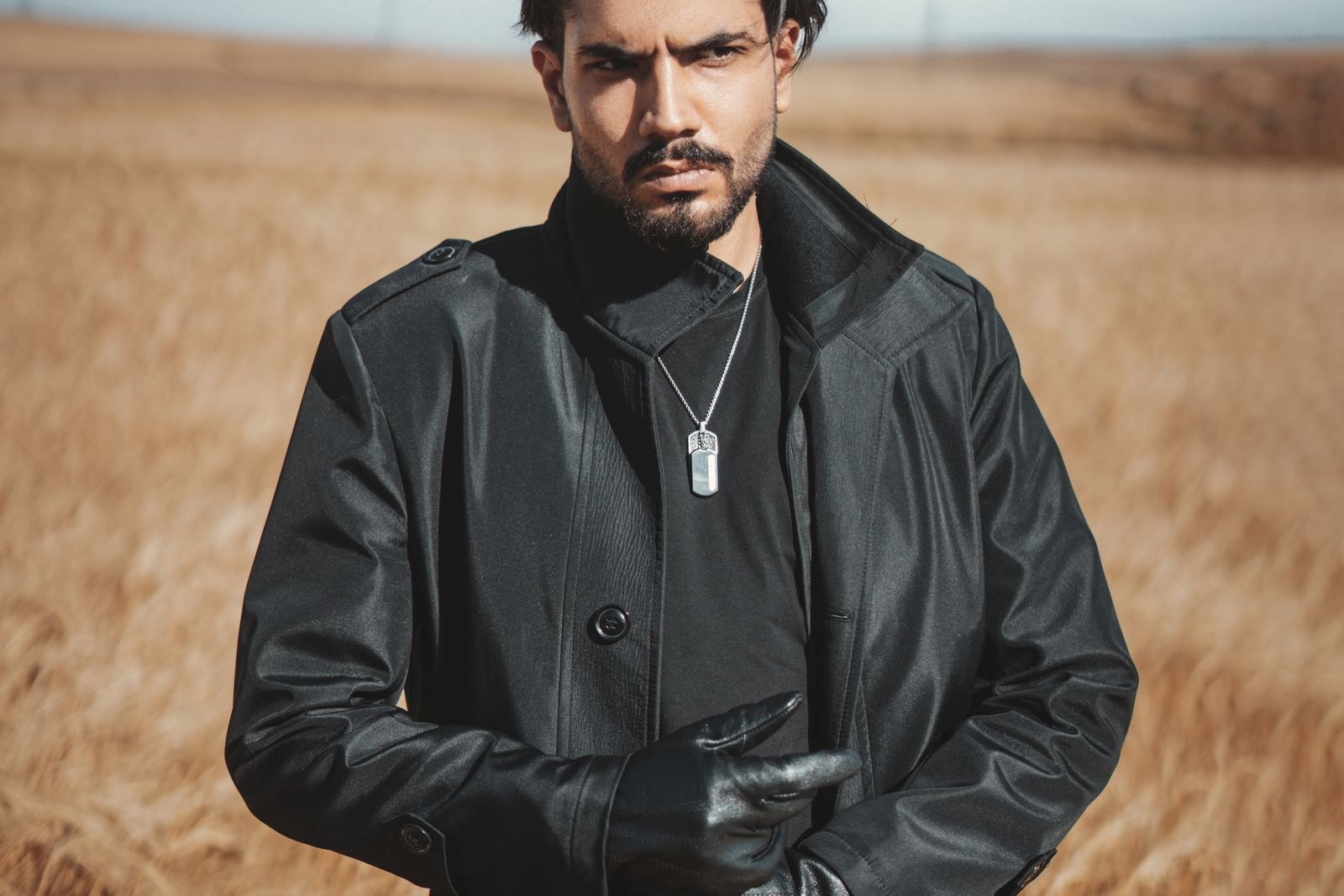
A beautiful pair of leather gloves is one of the quiet signatures of a well-dressed man. They are the first thing people see when you shake hands in winter. They frame a good overcoat, and they show that you care about details few others notice. Like a fine pair of shoes, great gloves are a craft object. The best are cut by hand from carefully chosen skins, sewn with tiny, even stitches and finished with decorative “points” on the back.
This guide explains the leathers, linings and stitching that separate ordinary gloves from exceptional ones, and shows how to measure your size properly. It looks at which famous glovemakers actually offer bespoke or made-to-measure work (fewer than you might think). It ends with care advice and how to wear gloves with a coat.
Key takeaways
- Leather decides the feel. Peccary is the most prized, soft and durable. Deerskin is rugged and supple. Hair sheep is smooth, strong and elastic. Lambskin nappa is the most delicate and refined.
- Lining decides the warmth. Dents ranks natural skins as warmest, followed by cashmere, wool, silk and unlined.
- Stitching is a mark of quality. Hidden inseam stitching looks sleek; an exposed prix seam is a popular, sporty choice for men. Hand-sewn gloves and three-point backs signal top craftsmanship.
- Size = palm circumference in inches. Measure around the widest part of your dominant hand, excluding the thumb.
- True bespoke is rare. Of the makers we checked, only Thomas Riemer in Vienna is described as doing true bespoke work. Dents states plainly that it does not make bespoke gloves.
- Care is simple: dry wet gloves flat at room temperature, never on a radiator, and condition them occasionally.
Why Leather Gloves Still Matter
Gloves have been a symbol of status for centuries. Their craft survives in a handful of historic centres: Worcester and Warminster in England, Millau in France, Naples in Italy and Vienna in Austria. Dents, founded in 1777 by John Dent in Wood Street, Worcester, still makes its Heritage Collection in its factory in Warminster.
Original article: Our Story – Dents
Dents explains that a pair of its gloves can go through up to 32 steps, from selecting and stretching the skin to cutting, stitching and finishing. That level of handwork is why a fine glove fits like a second skin and lasts for years.
Original article: Dents Guide to Buying Gloves – Dents
The Leathers: From Nappa to Peccary
| Leather | Character | Feel and durability | Best for |
|---|---|---|---|
| Lambskin / nappa | Smooth, fine grain, slight sheen | Very soft, thin, elegant; less rugged | City, evening, formal coats |
| Hair sheep | Smooth, tight grain | Strong, elastic, supple; often called the best glove leather | Everyday luxury, driving |
| Deerskin | Visible, rugged grain | Soft, stretchy, very durable; moulds to the hand | Country coats, tweed, everyday |
| Peccary | Distinctive three-dot pore pattern | Extremely soft, supple and durable | The connoisseur’s choice |
Lambskin and Nappa
Nappa usually describes soft, full-grain sheep or lamb leather. It gives the sleekest, most refined look and is the classic choice with a dark overcoat or evening wear. It is thinner and more delicate than the other leathers, so treat it with care.
Hair Sheep
Dents explains that hair sheep leather comes from sheep that grow fine hair rather than wool, which leaves the leather smooth. On its product pages Dents calls it “generally acknowledged as the best leather for gloves” for its strength and elasticity, and it is supple enough for driving gloves.
Deerskin
According to Dents, deerskin has the strength and elasticity of hair sheep but a more rugged appearance due to the grain; it is warm, breathable and soft. It is perfect with tweed, flannel and country coats.
Peccary
Peccary is the aristocrat of glove leathers. Dents describes it as a beautiful, soft and durable leather “originating from wild boars” (peccaries are boar-like animals of the Americas), rare and prized because it requires specialist cutting and hand sewing. Its grain shows a distinctive three-pore pattern, and it is remarkably soft and supple. Because the skins are rare, peccary gloves are the most expensive in most makers’ collections. Causse notes that shipping peccary gloves outside the European Union may take extra time.
The Linings: Cashmere, Silk or Unlined?
Dents ranks linings from warmest to coolest as follows: natural skins (such as sheepskin) > cashmere > wool > silk > unlined.
Original article: FAQs – Dents
| Lining | Warmth | Fit | When to wear |
|---|---|---|---|
| Cashmere | Very warm, light | Slightly fuller; size carefully | Deep winter, with overcoats |
| Wool | Warm | Similar to cashmere | Everyday winter |
| Silk | Light; Dents notes it helps regulate temperature | Close, elegant fit | Autumn and spring, formal wear |
| Unlined | Least warm | Closest, most tactile fit | Driving, mild weather, purists |
Many connoisseurs own two pairs: unlined or silk-lined for autumn and cashmere-lined for winter. An unlined peccary glove is the ultimate expression of the craft, because there is nothing to hide imperfect stitching.
Stitching and Construction: Reading the Details
| Term | What it means | Look |
|---|---|---|
| Inseam | Seams sewn inside and hidden | Sleek, dressy |
| Prix seam | Exposed seam (Dents: more popular in men’s gloves) | Crisp, sporty |
| Pique | One edge laid over the other and stitched on the outside | Neat, dressy, visible |
| Whip stitch / brosser | Visible stitch wrapped over the edge | Casual, handcrafted |
| Hand-sewn | Stitched entirely by hand | Superior shaping and finish |
| Points | Three lines (sometimes one) of decorative stitching on the back | The classic gentleman’s glove |
| Fourchettes | Inside panels on the fingers | Better finger shape and movement |
| Quirks | Small diamond-shaped pieces hand-sewn at the base of the fingers | Better fit, a mark of quality |
| Vent | V-shaped cut on the palm or back at the wrist | Better fit around the wrist |
| Strap and roller | Strap for adjusting the fit around the wrist | Heritage detail |
Original article: Dents Guide to Buying Gloves – Dents
“Three-point” gloves feature three lines of stitching on the back of the hand, a hallmark of traditional craftsmanship. Hand-sewn gloves take far longer to make. Thomas Riemer in Vienna notes that an experienced seamstress makes only three pairs of entirely hand-sewn gloves a day.
Original article: Making-of – Thomas Riemer Handschuhe
How to Measure Your Glove Size
Glove sizes are traditionally given in inches:
- Take a soft tape measure.
- Wrap it around the widest part of your dominant hand’s palm, just below the knuckles, excluding the thumb.
- Keep your hand flat and relaxed, fingers together.
- The measurement in inches is your size. Thomas Riemer, for example, offers full and half sizes.
Original article: Sizing Guide – Thomas Riemer Handschuhe
| Palm circumference (cm) | Approx. inches | Glove size |
|---|---|---|
| 19.0 | 7.5 | 7½ |
| 20.3 | 8.0 | 8 |
| 21.6 | 8.5 | 8½ |
| 22.9 | 9.0 | 9 |
| 24.1 | 9.5 | 9½ |
| 25.4 | 10.0 | 10 |
Some Neapolitan makers use a different calculation. Omega’s size page divides the palm circumference in centimetres by 2.7 (the old French inch), so always check each maker’s own chart.
Original article: Sizes – Omega Gloves
Fit tip: new leather gloves should feel snug, like a second skin. Leather relaxes with wear, and Thomas Riemer advises that gloves should be snug when new. Cashmere-lined gloves feel fuller than unlined ones in the same size.
The Glovemakers: Who Really Offers Made-to-Measure?
Many articles casually call luxury gloves “bespoke”. We checked each maker’s own website and other public sources at the time of writing.
| Maker | Base | Founded / heritage | Bespoke or made-to-measure? |
|---|---|---|---|
| Thomas Riemer | Vienna | Took over Vienna’s oldest glove shop (founded 1845); own workshop in Hungary since 2009 | Yes, described as true bespoke work with detailed hand measurement |
| Dents | Warminster, England | 1777 | No. Its FAQ states it is unable to make bespoke gloves or provide alterations |
| Causse | Millau, France | 1892; part of CHANEL’s Maisons d’art since 2012 | Not confirmed on its website |
| Sermoneta | Rome | 1960s | Not confirmed on its website |
| Merola | Rome / Naples | Gloves made in Naples, hand-cut and hand-stitched | Not confirmed on its website |
| Omega | Naples | 1923; fifth-generation maître gantier | Offers a “customize your gloves” link; made-to-measure not confirmed |
| Fratelli Orsini | Italy | Since 1998 | Not offered on its website |
Thomas Riemer, Vienna
Thomas Riemer’s father, Erwin, co-founded the Austrian glove company RIKA in the 1960s, which outfitted athletes at the 1964 Innsbruck Olympics. Thomas later took over Vienna’s oldest glove shop, founded in 1845. His gloves were first made in Hungarian factories; in 2009 he opened his own workshop in Hungary, and experienced seamstresses sew the hand-sewn models. In a trunk-show announcement, Julius Boutique describes Riemer’s “dedication to true bespoke work”, with hands “measured in exacting detail”.
Original article: Our Story – Thomas Riemer Handschuhe
Original article: Trunk Show: Crockett & Jones and Thomas Riemer Gloves – Julius Boutique
Dents, England
The best-known English glovemaker, founded in 1777. Dents is admirably clear: “Unfortunately, we are unable to make bespoke gloves or provide any alterations on our products.” Its ready-to-wear Heritage Collection, made in Britain, is nonetheless an excellent benchmark.
Causse, Millau
Founded in 1892 in Millau, the historic capital of French glovemaking, Causse has passed through four generations. Around forty artisans work in workshops designed by architect Jean-Michel Wilmotte. Since 2012 it has been part of CHANEL’s Maisons d’art. It holds the French Entreprise du Patrimoine Vivant label.
Original article: The House of Causse Gantier – Causse
Sermoneta, Rome
Founded by Giorgio Sermoneta in the 1960s, the Rome house is known for its coloured gloves. Its tailoring page describes a paper pattern, hand cutting and a thumb shaped separately, a craft it has practised for over fifty years.
Original article: La Sartoria – Sermoneta Gloves
Merola, Omega and the Neapolitan Tradition
Naples is the heart of Italian glovemaking. Merola, based in Rome, makes all its gloves in Naples, hand-cut and hand-stitched. Omega was founded in 1923 by Gennaro Squillace. It is now led by fifth-generation maître gantier Alberto Squillace and describes 25 production stages by hand. It works in plongé lamb, peccary, carpincho and deer, with silk and Biella cashmere linings, in the glovemaking tradition of Naples’ Sanità district.
Original article: History – Merola Gloves
Original article: About – Omega Gloves
Our advice: if you want true bespoke, contact the maker directly, ask whether they will take your measurements and adjust the pattern, and ask how many fittings are included.
Luxury Gloves Worth Owning (Prices at the Time of Writing)
Prices were checked on each maker’s official online store at the time of writing. European makers list prices in euros.
| Glove | Leather / lining | Price at the time of writing |
|---|---|---|
| Causse Men’s Vendôme Peccary Gloves | Peccary, exterior stitching, snap | €1,100 |
| Dents Men’s Heritage Three-Point Cashmere-Lined Leather Gloves | Hair sheep, 3-ply Scottish cashmere | $385 |
| Fratelli Orsini Antonio Peccary Gloves | Peruvian peccary, cashmere | $349 |
| Dents Men’s Heritage Cashmere-Lined Leather Gloves | Leather, Scottish cashmere, inseam | $302 |
| Thomas Riemer Gentlemen’s Hair Sheep Nappa Gloves | Navy hair sheep nappa, cashmere, 3 hand-stitched points | €270 |
| Omega Peccary Man | Peccary, hand-sewn; cashmere or unlined | €200 (cashmere) |
| Sermoneta 130 Hand-Sewn Deerskin Gloves | Deerskin, cashmere | €169 |
Causse Men’s Vendôme Peccary Gloves
Made in Millau with delicate exterior stitching and a Causse snap at the wrist, this is French glovemaking at its most refined.
Price: €1,100 – Causse Men’s Vendôme Peccary Gloves
Dents Men’s Heritage Three-Point Cashmere-Lined Leather Gloves
Hair sheep leather, three hand-sewn points, a strap-and-roller fastening and 3-ply Scottish cashmere lining. It is made in Britain.
Price: $385 – Dents Men’s Heritage Three-Point Cashmere-Lined Leather Gloves
Fratelli Orsini Antonio Peccary Gloves
Handcrafted in Italy from Peruvian peccary with a cashmere lining. The brand highlights peccary’s signature three-pore grain.
Price: $349 – Fratelli Orsini Antonio Peccary Gloves
Dents Men’s Heritage Cashmere-Lined Leather Gloves
A clean, undecorated design with hidden inseam stitching, a palm vent and Scottish cashmere lining. It is available in black, English tan and navy.
Price: $302 – Dents Men’s Heritage Cashmere-Lined Leather Gloves
Thomas Riemer Gentlemen’s Gloves in Hair Sheep Nappa
Navy hair sheep nappa, tone-in-tone stitching, light grey cashmere lining and cuffs, and three hand-stitched points. This is Viennese elegance.
Price: €270 – Thomas Riemer Gentlemen’s Gloves, Hair Sheep Nappa with Cashmere
Omega Peccary Man
Entirely hand-sewn peccary gloves from Naples. The cashmere-lined version was €200 and the unlined version €180 at the time of writing.
Price: €200 – Omega Peccary Man Gloves
Sermoneta 130 Hand-Sewn Deerskin Gloves
Black deerskin, hand-sewn, with a cashmere lining, from Rome’s famous glove house.
Price: €169 – Sermoneta 130 Hand-Sewn Deerskin Gloves with Cashmere Lining
How to Care for Leather Gloves
Dents recommends a few simple rules:
- If gloves get wet, dry them flat on a towel at room temperature.
- Never dry them on a radiator or heater, in a tumble dryer or in direct sunlight. Keep them away from air conditioning too.
- Put them on while they are still slightly damp and flex your hands to “massage” the leather back into shape.
- Apply a small dab of leather conditioner occasionally to keep the leather supple.
Original article: How to Care for Leather Gloves – Dents
Further good habits:
- Remove gloves finger by finger, not by pulling the cuff, to protect the seams.
- Store them flat, not balled up in a pocket, in a breathable bag.
- Keep fragrance, hand cream and beard oil off the leather. Apply hand cream and beard oil well before putting on gloves; oils can stain light leathers.
How to Wear Leather Gloves With a Coat
| Coat | Glove | Colour pairing |
|---|---|---|
| Navy or charcoal overcoat | Unlined or silk-lined nappa or hair sheep, three-point | Black or dark brown |
| Camel coat | Peccary or deerskin, cashmere-lined | Tan, cognac or chocolate |
| Tweed or country coat | Deerskin with prix seams | Tan or brown |
| Black evening coat | Fine black nappa, inseam | Black only |
| Leather jacket or shearling | Deerskin or peccary | Brown or black matched to the jacket |
Style rules worth knowing:
- Match the glove to your shoes and belt, not necessarily to the coat.
- Brown is more versatile than black for daytime. Black is the formal choice.
- The cuff should disappear under the coat sleeve. Gloves that stop short at the wrist look mean.
- Colour is allowed. Bottle green, burgundy or navy gloves with a grey coat are a sophisticated touch.
FAQ
What is the best leather for gloves?
Hair sheep is widely considered the best all-round glove leather for its strength and elasticity. Peccary is the most luxurious and durable. Deerskin is more rugged, and lambskin nappa is the most refined but also the most delicate.
Are cashmere-lined gloves worth it?
Yes, for winter. Cashmere is one of the warmest linings while staying light. Dents ranks it second only to natural sheepskin. For autumn or driving, unlined or silk-lined gloves feel more tactile.
How do I know my glove size?
Measure around the widest part of the palm of your dominant hand, excluding the thumb. The figure in inches is your glove size. Some Neapolitan makers use a centimetre-based formula, so check the maker’s chart.
Should leather gloves be tight?
They should be snug, not painful. Leather relaxes with wear, so a new pair should feel close-fitting, especially unlined gloves.
Can I get bespoke gloves from Dents?
No. Dents states on its FAQ page that it is unable to make bespoke gloves or provide alterations. Thomas Riemer in Vienna is described by stockists as doing true bespoke work.
Why are peccary gloves so expensive?
Peccary skins are rare, need specialist cutting and are often sewn by hand. The result is very soft, very durable leather with a distinctive grain.
How do I clean leather gloves?
Spot-clean gently with a slightly damp cloth, let them dry naturally at room temperature and apply a small amount of leather conditioner. Avoid heat and washing machines unless the maker says the gloves are washable.
The Bottom Line
Great gloves are a small investment that pays off every winter. Choose the leather for the life you lead: nappa for the city, hair sheep for everyday, deerskin for the country and peccary for a lifetime. Choose cashmere for deep cold and silk or unlined for elegance. Look for hidden inseams or crisp prix seams, three points and hand-sewn details.
Measure your hand carefully, and if you want true bespoke, ask the maker directly. Of the houses we checked, Thomas Riemer in Vienna is the one publicly described as offering it. Then look after them: dry them gently, condition them occasionally and wear them with a coat that deserves them.