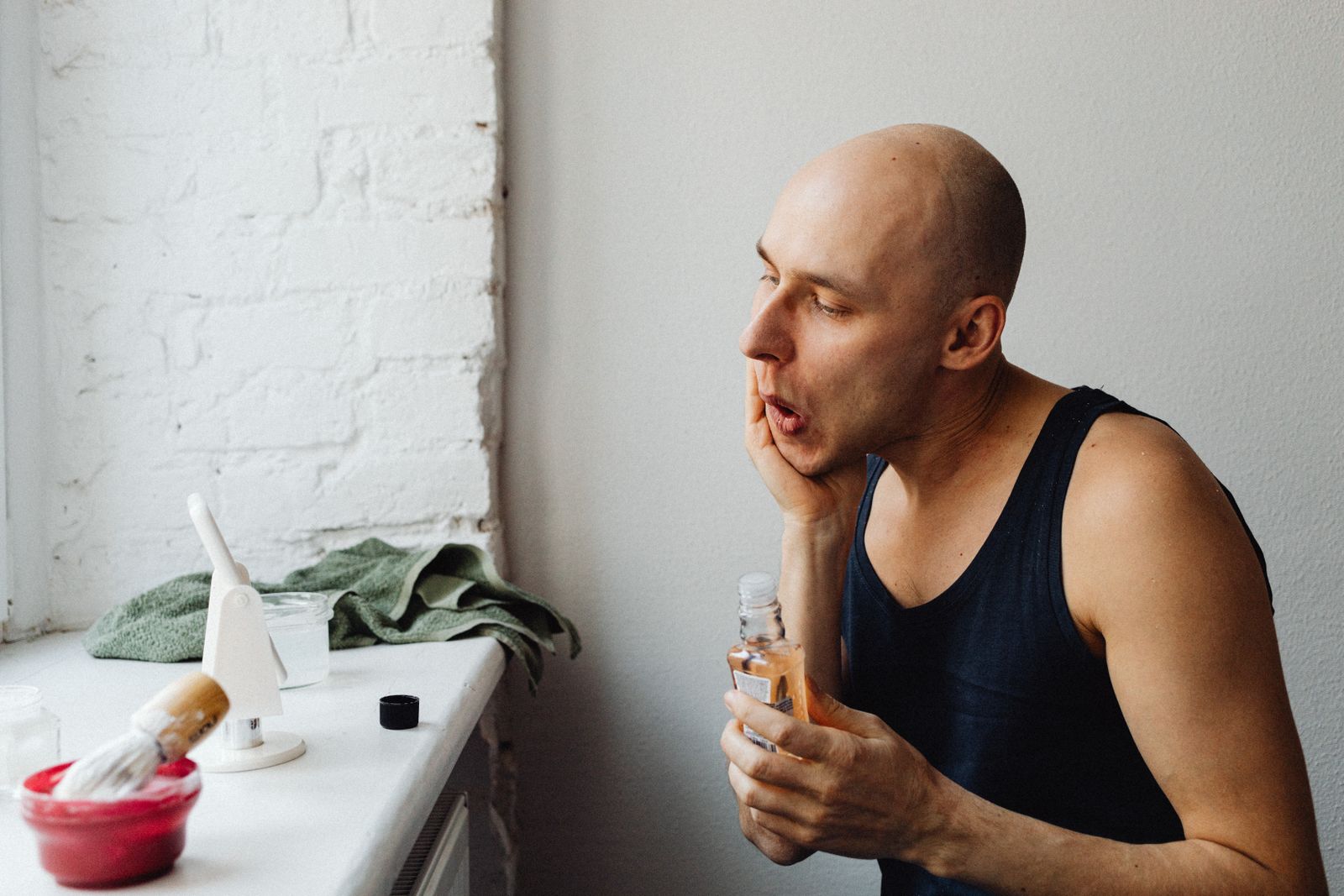
Few grooming rituals are as recognisable as the finishing touch after a shave. There is the slap of a cool splash, the sting on fresh skin, then a scent that lingers on the collar. Aftershave seems timeless, yet it has a surprisingly rich history. It runs from barbers’ alum stones and sailors’ bay rum to a fragrance created in Cologne in the early 1700s. It includes American drugstore icons, Italian barbershop classics and Turkey’s beloved kolonya.
This guide traces that history using company archives, museums and historians. It explains why the alcohol splash has largely given way to soothing balms, and which luxury houses carry the tradition today.
Key takeaways
- Aftershave began as practical first aid. Barbers used alum stones to soothe razor burn and close small nicks, and alcohol-based waters to cleanse and refresh.
- Eau de Cologne was born in 1709. Giovanni Battista Farina founded his Cologne fragrance business that year, and Johann Maria Farina created a light citrus water that gave a whole fragrance category its name.
- The 19th and 20th centuries created the icons: Ed. Pinaud in Paris, Aqua Velva (1917), Old Spice men’s toiletries (1938), Proraso (1948) and, in Turkey, Eyüp Sabri Tuncer (1923) and Rebul Lavender (1938).
- Bay rum is a sailors’ and Caribbean tradition of bay leaves steeped in rum. It remains a classic barbershop scent.
- Today, dermatologists favour moisturising balms over harsh alcohol splashes for most skin types.
- Luxury aftershave now means skin care plus fragrance. Think Truefitt & Hill, Floris, Creed, Acqua di Parma and Penhaligon’s.
A Timeline of Aftershave
| Year | Milestone |
|---|---|
| 1709 | Giovanni Battista Farina founds his fragrance business in Cologne; Johann Maria Farina’s citrus water becomes “Eau de Cologne” |
| 1730 | Juan Famenias Floris and his wife Elizabeth begin selling perfume, combs and shaving products in London’s St James’s |
| 1805 | Truefitt & Hill opens in Mayfair, later recognised by Guinness as the world’s oldest barbershop |
| 1830 | Edouard Pinaud takes over a Paris perfume shop, the start of the House of Ed. Pinaud |
| 1895 | Jean Cesar Reboul opens the Grande Pharmacie Parisienne in Istanbul’s Pera |
| 1917 | J.B. Williams Co. of Connecticut first sells Aqua Velva |
| 1923 | Eyüp Sabri Tuncer opens his first shop in Ankara |
| 1938 | Shulton adds men’s after-shave lotion to Old Spice; Rebul launches Lavender kolonya |
| 1948 | Proraso’s Pre and After Shave Cream is created in Florence |
| 1957 | Laboratoires Osma begins making alum stones near Lyon |
The Barber’s First Aid: Alum Stones
Long before fragrance, the barber’s biggest concern was the skin. A straight razor leaves micro-cuts and irritation, especially on stubble shaved daily. One of the oldest solutions is alum, a mineral salt with an astringent effect.
France’s Laboratoires Osma has made alum stones by hand near Lyon since 1957. The company recounts that its Bloc Osma became “the faithful partner of the barbers who used it after every shave to soothe razor burn and repair small cuts”. It later added a styptic pencil for nicks. Alum blocks are still sold today, and many wet shavers glide one over damp skin before their balm.
Original article: Our company – Laboratoires Osma
In the Ottoman world, the barber was even more than a groomer. A 2022 academic study based on Ottoman archive documents found that 19th- and early-20th-century barbers also pulled teeth, performed cupping and circumcision, and examined and treated patients. The care of skin after a shave was part of a wider culture of hygiene and healing.
Original article: Osmanlı Son Döneminde Berberlik – International Journal of Social Sciences (DergiPark)
Bay Rum: The Sailors’ Splash
Bay rum is one of the most romantic scents in men’s grooming. According to St Johns Bay Rum, the tradition began with sailors in the West Indies who steeped the leaves of the bay tree in rum. The result was a spicy, warm splash used to freshen up when fresh water was scarce. The company dates claims of bay rum’s origin to at least 1838. St Johns itself was founded by naval officer John Webb on St Thomas during the Second World War, and its bottles are known for their woven “fishnet” covers.
Original article: History of the Bay Rum Aftershave – St Johns Bay Rum
Bay rum became a fixture in American barbershops, splashed on after a hot-towel shave. Its clove-and-spice profile is still a favourite with traditional wet shavers.
1709: The Birth of Eau de Cologne
The single most important moment in aftershave history came from perfumery. On 13 July 1709, Giovanni Battista Farina founded the business “G. B. Farina” in Cologne. His brother Johann Maria Farina (1685–1766) joined in 1714. The German Patent and Trade Mark Office describes how Johann Maria created a fragrance water from bergamot, lemon and orange that reminded him of “an Italian spring morning after the rain”. He named it Eau de Cologne in honour of his new home. Farina is believed to be the world’s oldest perfume factory still in existence.
Original article: Farina – Brands with History – German Patent and Trade Mark Office
Cologne’s Farina Fragrance Museum adds that Farina combined citrus oils with pure alcohol, creating a fresh, light fragrance that laid the foundation for modern perfumery. Its customers included Napoleon, Goethe, Queen Victoria and Empress Elisabeth (“Sisi”). The name became so famous that “eau de cologne” turned into a generic term for light citrus fragrances. Those fragrances are the direct ancestors of the classic citrus aftershave.
Original article: Farina Fragrance Museum – Museen Köln
London and Paris: The Gentleman’s Shops
Floris, Jermyn Street (1730)
Floris was founded in 1730, when Juan Famenias Floris and his wife Elizabeth began selling perfume, combs and shaving products in London’s St James’s. The shop at 89 Jermyn Street is still run by their descendants. Its famous No. 89 fragrance dates from the early 1950s and became a favourite of Ian Fleming, who mentioned Floris products in his 1955 novel Moonraker.
Original article: Our History – Floris London
Truefitt & Hill, Mayfair (1805)
Truefitt & Hill opened in Mayfair in 1805, the year of the Battle of Trafalgar. In 2014 it was recognised by Guinness World Records as the oldest barbershop in the world. Its shaving creams, colognes and balms grew out of daily barbering in St James’s and Mayfair.
Original article: Our History – Truefitt & Hill
Ed. Pinaud, Paris (1830)
Edouard Pinaud, born in 1810 in Abbeville, bought the perfume shop “A la Corbeille Fleurie” at 230 rue Saint-Martin in Paris in 1830. In 1842 he registered as a “Manufacturer of Parfumeries Superfines”. The house supplied Napoleon III and Queen Victoria.
Original article: The Story of Ed. Pinaud – Ed. Pinaud
Today the American Clubman brand carries the House of Ed. Pinaud name. Its Lilac Vegetal aftershave is still popular, and its packaging still graces barber stations across the US.
Original article: About Us – Clubman
America: Aqua Velva and Old Spice
Aqua Velva (1917)
Connecticut was once a powerhouse of men’s toiletries. The J.B. Williams Company of Glastonbury, which began making soap in 1847, produced Williams’ Genuine Yankee Soap. The University of Connecticut archives describe it as the first manufactured soap for shaving mugs. On 17 November 1917 the company filed the trademark Aqua Velva for face lotions and after-shave preparations it had first sold in October 1917. The blue splash became an American classic.
Original article: The Aqua Velva State – Connecticut History
Original article: There’s Something About an Aqua Velva Man: The J.B. Williams Company – UConn Archives
Old Spice (1937–1938)
Old Spice started as a women’s line. In 1937, Shulton introduced Early American Old Spice toiletries. In 1938, it added men’s products, including a shaving mug, after-shave lotion, cologne, talcum and soap, with a different scent. The shaving mug, made by Hull Pottery, carried an image of a sailing frigate. Ships remained part of the brand’s identity for decades.
Original article: Shulton – Cosmetics and Skin
Italy: Proraso and the Florentine Barbershop (1948)
Proraso traces its roots to a family company founded in 1908 by Ludovico Martelli. In 1948, a small Florentine laboratory created the Pre and After Shave Cream for barbers, and four generations later the brand’s products are still found in barbershops around the world.
Original article: A Beautiful Italian Story – Proraso
Turkey: Kolonya, Lavender and the Barber’s Flame
No country embraced the cologne idea more fully than Turkey. Kolonya, usually lemon-scented and high in alcohol, is a symbol of hospitality. It is drizzled onto guests’ hands at home, in restaurants, on long-distance buses and, as Daily Sabah notes, especially in barbershops.
Original article: It’s time to commend Turkey’s cologne culture – Daily Sabah
Two names stand out:
- Rebul. In 1895, Frenchman Jean Cesar Reboul opened the Grande Pharmacie Parisienne on Rue de Pera in Istanbul. In 1938 it launched Rebul Lavender, made with lavender from Reboul’s own garden. In 1939 Reboul returned to France and left the pharmacy to his partner Kemal.
- Eyüp Sabri Tuncer. In 1923, the year the Republic was founded, Eyüp Sabri Tuncer opened a shop in Ankara. Anadolu Agency reports that he learned to make cologne from an essence seller in Istanbul’s Tahtakale. The brand now exports to dozens of countries.
Original article: Our Story – Rebul Holding
Original article: Cumhuriyetin kuruluşuna şahitlik eden Eyüp Sabri Tuncer – Anadolu Ajansı
Turkish barbers also became famous for theatre. CNN describes how an Istanbul barber, as an apprentice, would douse the razor with cologne and set it alight to sterilise it. Today he uses a UV cabinet, but he still flames the blade with spirit. For the dramatic ear-hair flaming, he now uses wax or a cigarette lighter.
Original article: How to shave with a straight razor, according to a Turkish barber – CNN
From Splash to Balm: Why Aftershave Changed
For most of the 20th century, aftershave meant a high-alcohol splash. The sting was part of the experience, and the alcohol acted as an antiseptic. Modern dermatology is less enthusiastic. Cleveland Clinic advises men to avoid alcohol-based aftershaves. They note that “Alcohol-based products are traditionally meant to act as an antiseptic”, but alcohol dries out the skin and can be very irritating. A moisturiser is more helpful for most people.
Original article: Skin Care for Men – Cleveland Clinic
That is why the luxury market moved towards:
| Format | Feel | Best for |
|---|---|---|
| Splash or lotion (alcohol) | Cooling, tingling, strong scent | Oily skin, traditionalists, occasional use |
| Witch hazel or low-alcohol lotion | Fresh, lightly toning | Normal skin |
| Balm | Creamy, soothing, moisturising | Dry, sensitive or beard-line skin |
| Serum or emulsion | Light, fast-absorbing | Men who want skin care without heavy scent |
Many classic houses now offer both: a fragrant splash for tradition and a balm in the same scent for comfort.
How to Use Aftershave Like a Gentleman
- Rinse with cool water after shaving and pat, don’t rub, the skin dry.
- Use alum or a styptic only on nicks, or as a quick glide over the shaved area if your skin tolerates it.
- Choose your finish: a few drops of balm warmed between the palms, or a small splash for the classic tingle.
- Keep it off the beard itself. If you wear a beard and shave only the cheeks or neck, apply aftershave to the shaved skin. Use beard oil or balm on the hair.
- Layer scents wisely. Matching aftershave and fragrance gives a seamless finish. Otherwise choose an unscented balm.
Luxury and Classic Aftershaves Today (US)
Prices were checked on the brands’ official US stores at the time of writing. Creed, Acqua di Parma (whose Barbiere line is a modern homage to the Italian barbershop) and Penhaligon’s also sell aftershaves. Their US pages could not be checked for prices at the time of writing, so they are not listed with prices here.
| Product | Format | Price at the time of writing |
|---|---|---|
| Floris No. 89 Aftershave (100 ml) | Witch hazel splash | $105.00 |
| Truefitt & Hill 1805 Aftershave Balm (100 ml) | Balm | $72.00 |
| St Johns Bay Rum Aftershave (4 oz) | Splash | $65.00 |
| Floris No. 89 Aftershave Balm (100 ml) | Balm | $54.00 |
| Proraso After Shave Balm, Sensitive (3.4 oz) | Balm | $16.00 |
| Clubman Pinaud Lilac Vegetal After Shave Lotion (6 oz) | Splash | $8.99 |
Floris No. 89 Aftershave
The scent Ian Fleming loved, in a refreshing aftershave that Floris formulates with witch hazel as a natural astringent and glycerine for comfort. It is pure Jermyn Street.
Price: $105.00 – Floris No. 89 Aftershave
Truefitt & Hill 1805 Aftershave Balm
A soothing balm from the world’s oldest barbershop, made with lanolin and aloe and suitable for sensitive skin. It is an elegant way to honour tradition without the sting.
Price: $72.00 – Truefitt & Hill 1805 Aftershave Balm
St Johns Bay Rum Aftershave
The bay rum classic from the US Virgin Islands. It has warm, spicy bay leaf and the famous woven bottle.
Price: $65.00 – St Johns Bay Rum Aftershave
Floris No. 89 Aftershave Balm
The same No. 89 scent in a moisturising balm, ideal for daily use or drier skin.
Price: $54.00 – Floris No. 89 Aftershave Balm
Proraso After Shave Balm, Sensitive Skin
The Florentine barbershop brand in a gentle balm for reactive skin.
Price: $16.00 – Proraso After Shave Balm Sensitive
Clubman Pinaud Lilac Vegetal
A true piece of barbershop history: the House of Ed. Pinaud’s Lilac Vegetal, still in its classic bottle. It is a splash, so use it sparingly on dry skin.
Price: $8.99 – Clubman Lilac Vegetal After Shave Lotion
FAQ
Who invented aftershave?
No single person did. Barbers used astringents such as alum to soothe skin. Sailors and barbershops used bay rum. Farina’s 1709 Eau de Cologne popularised light alcohol-based citrus waters that became the template for aftershave lotions. Brands such as Pinaud, Aqua Velva and Old Spice turned them into mass-market products.
What is the difference between cologne and aftershave?
Eau de cologne is a light fragrance worn for scent. Aftershave is applied to freshly shaved skin to soothe and refresh. It usually carries a lighter scent and often includes skin-care ingredients. Many brands sell both in matching scents.
Why does aftershave sting?
Traditional splashes contain a lot of alcohol, which stings on freshly shaved skin with micro-cuts. Cleveland Clinic notes that alcohol was traditionally meant as an antiseptic but can dry out and irritate skin. A balm usually does not sting.
Is bay rum an aftershave or a cologne?
Both. Classic bay rum is a splash used after shaving that also works as a light, spicy cologne.
Is kolonya the same as aftershave?
Not exactly. Turkish kolonya is a high-alcohol cologne used for refreshing hands and face and for hospitality, and many barbers offer it after a shave. Because of its alcohol content, men with dry or sensitive skin usually prefer a balm on freshly shaved skin.
Should I use aftershave if I have a beard?
Yes, on the shaved areas such as the cheeks and neck. Use a balm on the skin there and beard oil for the beard itself.
The Bottom Line
Aftershave started as first aid: alum to close nicks and alcohol to cleanse. Then perfumers turned it into pleasure. Farina’s 1709 Eau de Cologne, the gentlemen’s shops of Jermyn Street and Mayfair, Pinaud’s Paris house, Aqua Velva, Old Spice, Proraso and Turkey’s kolonya masters all shaped the ritual we know.
Today the most refined choice is usually a balm that soothes and moisturises while carrying a beautiful scent. The classic splash still has its place for those who love the tingle. Either way, a good aftershave is a small daily luxury with three centuries of history behind it.