
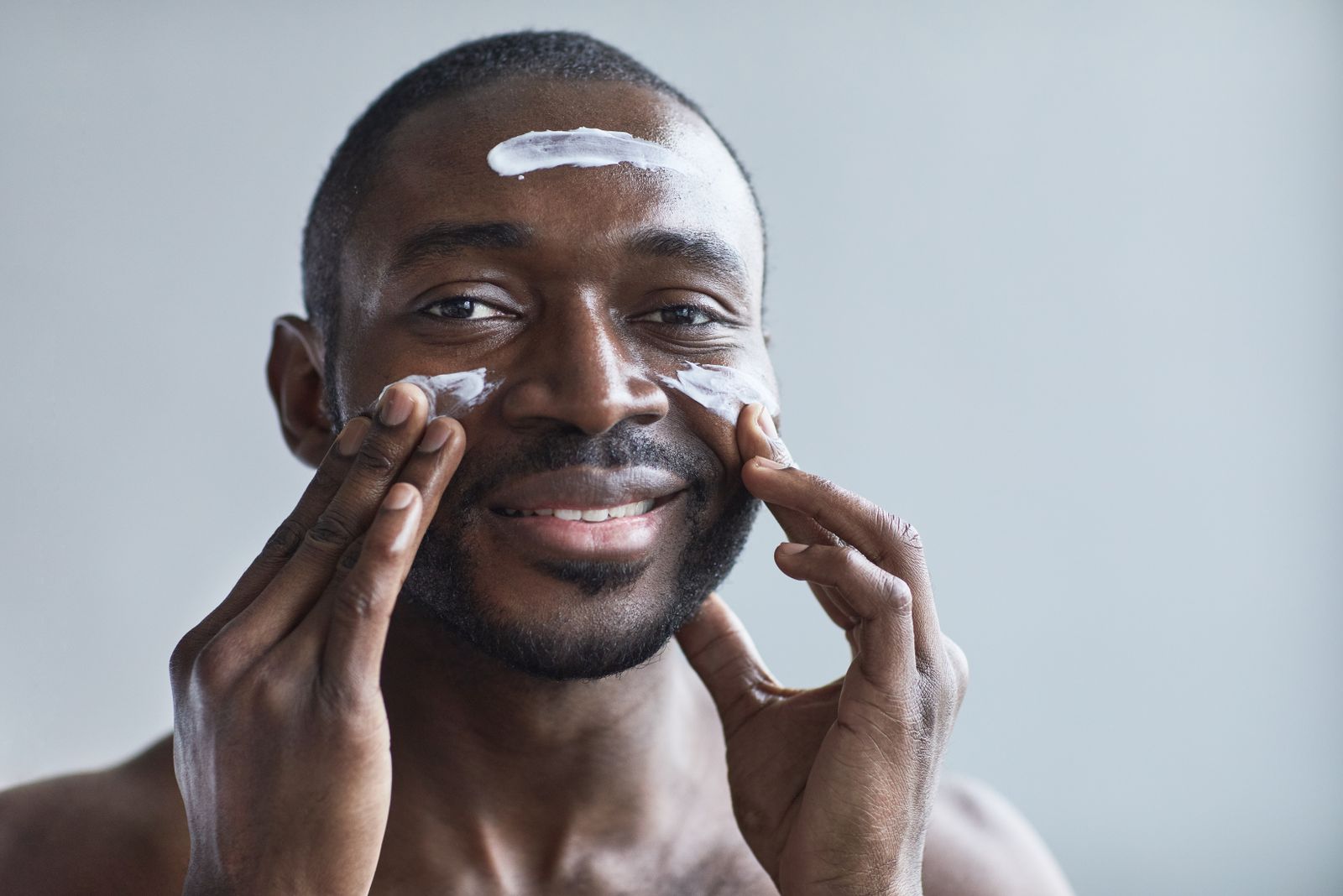
The radiator clicks on, the wind turns sharp, and within a week your face feels tight by noon. Men’s winter skin care is not about adding ten new steps. It is about protecting one thing: your skin barrier. Here is what dermatologists, grooming editors and the latest search data say about keeping your face (and the skin under your beard) calm, comfortable and sharp all season.
Quick take
- Barrier repair is the skincare topic of the season, and searches in the US are at a two-year peak.
- Switch from a light gel to a richer cream with ceramides, fatty acids and an occlusive.
- Do not quit your retinol. Use it less often and “sandwich” it between layers of moisturizer.
- SPF 30 every morning, SPF 50 on the slopes. Winter UV is lower, not gone.
- Wash less aggressively, moisturize within three minutes, and choose fragrance-free.
- Flakes in your beard are usually a skin problem, not a beard problem. Treat the skin underneath.
1. Barrier Repair Is the Skin Care Trend of the Season
If your feed is suddenly full of “barrier repair” creams, you are not imagining it. The trend tracker Next Big reports that interest in barrier repair cream is up 110% in a year and 29% in the last three months, with roughly 8,000 searches a month in the US. According to the same data, interest is sitting at the top of its two-year range.
Why now? The skin barrier is the outermost layer of your skin. Think of it as a brick wall: skin cells are the bricks, and lipids such as ceramides, cholesterol and fatty acids are the mortar. When that mortar runs low, water escapes. Dermatologists call this transepidermal water loss (TEWL). The result is the classic winter trio of tightness, flaking and redness.
New York dermatologist Dr. Angela Azar wrote in early October that lower temperatures, low humidity, wind and indoor heating all disrupt the barrier, and that research has found colder, less humid conditions go hand in hand with more online searches for dry skin and moisturizers. In other words, the weather drives the trend. For a man with standards, the takeaway is simple: barrier care is not a fad to chase. It is basic maintenance, like conditioning good leather before winter.
Original article: Next Big
2. The Texture Switch: From Light Gel to Rich Cream
The lightweight gel that felt perfect in July rarely survives January. GQ’s grooming team put it plainly in its guide to the best winter creams: cold air calls for thicker, more nourishing, more occlusive creams that help skin repair while also protecting the barrier.
What does that mean in practice? Look for a cream that combines three types of ingredients:
- Humectants such as glycerin and hyaluronic acid draw water into the skin.
- Emollients such as squalane, shea butter and fatty acids smooth rough, flaky patches.
- Occlusives such as petrolatum or dimethicone seal everything in.
GQ’s winning winter cream reads like a dermatologist’s checklist: ceramides, hyaluronic acid, fatty acids, squalane, glycerin and shea butter, in a fragrance-free formula. The editors also suggest a smart winter rotation: a more protective cream during the day and a richer, more restorative cream at night, when skin shifts into repair mode.
Vogue’s recent barrier guide echoes this. Dermatologists there describe winter as the time to move from lightweight gels to cream-based moisturizers rich in ceramides, lipids and humectants. If your skin is oily or acne-prone, you do not have to jump to a heavy balm. Simply move one step up in texture, for example from a gel to a lotion-cream, and watch how your skin responds over two weeks.
Original article: GQ
3. Retinol in Winter: Don’t Quit, Just Sandwich It
Retinoids (retinol, retinal and prescription tretinoin) are the gold standard for smoother texture, fewer breakouts and fewer fine lines. They also have a reputation for drying skin out, which is why many men stop using them as soon as the heat comes on.
The University of Rochester Medical Center argues that is a mistake. Its dermatology team writes that, despite common myths, retinol is still a great choice for your night routine in winter, because retinoids support collagen production, cell turnover, acne control and overall skin texture. With lower sun exposure in winter, photosensitivity may be less noticeable, although daily SPF stays essential.
The trick is the “sandwich method”: apply a thin layer of moisturizer, then your retinoid, then another layer of moisturizer. This buffers irritation while keeping the benefits. The American Academy of Dermatology’s winter survival kit adds another lever: many dermatologists recommend using anti-aging actives such as retinol, glycolic acid or salicylic acid less often or at a lower concentration in winter.
A practical plan for most men: drop from nightly use to two or three nights a week, use the sandwich method, and skip exfoliating acids on the same nights. If your skin stings when you apply a plain moisturizer, give it a full break until it calms down. If you use a prescription retinoid, ask your dermatologist before changing anything.
Original article: University of Rochester Medicine
4. SPF in Winter: 30 for the Commute, 50 for the Mountain
Sunscreen is the step men drop first when the days get short. Men’s Health asked dermatologists about winter SPF, and every one agreed on the baseline: your daily moisturizer should have SPF 30 or higher, and SPF 15 should be avoided altogether.
Dr. Zalka told the magazine that SPF 30 is enough for commuting and errands, but that you should step up to SPF 50 for long stretches outdoors, especially on a mountain or when snow reflects light onto your face, neck and hands. Dr. Hadley King added useful context: SPF 30 blocks up to 97% of UVB rays, SPF 50 about 98%, and SPF 100 only around 99%. Anything above 50 is mostly unnecessary, so do not pay a premium for a bigger number.
The American Academy of Dermatology makes the same point for winter sports. Clear winter skies still let UV radiation through, and altitude plus snow can increase the risk of sunburn. The AAD recommends a broad-spectrum, water-resistant SPF 30+, applied about 15 minutes before going out and reapplied at least every two hours, without forgetting ears, nose, lips and the back of the neck.
For dry winter skin, the AAD suggests creamier sunscreens instead of sprays, or simply applying your moisturizer first and sunscreen on top. If you have a beard, put extra care into the exposed cheeks and the bridge of the nose, which take the brunt of wind and glare.
Original article: Men’s Health
5. Wash Less, Moisturize Faster, Skip the Fragrance
Many men damage their barrier before they even reach for a moisturizer. A long, hot shower and a foaming face wash feel great on a cold morning, but they strip the oils your skin needs.
Cleveland Clinic recommends a simple fix: pat skin dry and apply moisturizer within about three minutes of showering, before dry indoor air evaporates the water on your skin. Dermatologist Dr. Lucas also warns that the better a cream smells, the more likely it is to irritate. Added fragrance can cause micro-irritations that build up into dry, itchy, cracked skin. Cleveland Clinic suggests leaning on proven barrier ingredients instead: ceramides, hyaluronic acid, glycerin and petrolatum.
Dartmouth Health adds two habits worth stealing. If your skin feels dry, rinse with plain water in the morning and use a gentle cleanser only at night. And switch from a foaming cleanser to a cream-based one for the cold months. Its dermatologists also note that most people moisturize too rarely: dry skin may need a top-up during the day, not just after the shower.
Two more small upgrades: run a humidifier in the bedroom while the heating is on, and keep shower water warm rather than hot. None of this costs much, and all of it makes your premium creams work harder.
Original article: Cleveland Clinic
6. Under the Beard: Winter Flakes Are a Skin Issue
White flakes on a dark sweater are the least elegant winter accessory. The American Academy of Dermatology explains that flakes in your beard, together with itchy, scaly or greasy patches underneath, are often seborrheic dermatitis, the medical name for dandruff. The AAD notes that flare-ups are often seasonal, with most occurring in winter and early spring, and that cold, dry weather and hot showers are common triggers.
Board-certified dermatologist Dr. Ross Radusky outlines a three-step home approach in the AAD’s guide to common beard problems:
- Gently brush your beard every day before you wash your face to lift the scale. Brushing too hard can make it worse.
- For the first week, apply a hydrocortisone 1% solution to the skin beneath the beard at night after washing, then about once a week when the skin feels scaly.
- Shampoo your beard and scalp at least once a week with a dandruff shampoo containing 2% zinc pyrithione, 1% ketoconazole or 1% selenium sulfide.
The AAD’s self-care page adds that alcohol-free skin and grooming products help, because alcohol can trigger flare-ups, and that mineral sunscreens with zinc oxide or titanium dioxide are less likely to irritate. If a rash persists, or you notice pain, broken skin or acne-like bumps under the beard, the AAD recommends seeing a board-certified dermatologist.
The point for a well-groomed man: a beautiful beard starts with healthy skin. Treat the skin first, and the beard will look better on its own.
Original article: American Academy of Dermatology
This article summarizes published guidance for general information. It is not medical advice. For persistent dryness, rashes or prescription treatments, consult a board-certified dermatologist.
A Simple Men’s Winter Skin Care Routine
Morning: rinse with lukewarm water or a cream cleanser, apply a barrier cream to slightly damp skin, then finish with broad-spectrum SPF 30 or higher.
Evening: gentle cleanser, then your retinoid two or three nights a week using the sandwich method, and a richer cream on top. On off nights, just the cream.
Weekly: dandruff shampoo for beard and scalp if you see flakes, and a quick check of the skin under your beard.
Product Picks
SkinCeuticals Triple Lipid Restore 2:4:2 – $155 (1.6 fl oz). The connoisseur’s barrier cream. It uses a patented ratio of 2% pure ceramides, 4% natural cholesterol and 2% fatty acids, essentially the “mortar” your barrier loses in winter. SkinCeuticals says it can shorten the retinoid adjustment period by up to a week and even recommends it as the top layer of the sandwich method. Note that it contains an essential oil blend (lavender, rosemary, peppermint), so very sensitive skin should patch test first. SkinCeuticals Triple Lipid Restore 2:4:2
Augustinus Bader The Rich Cream – from $99 (15 ml); $195 (30 ml), $315 (50 ml), $565 (100 ml). The luxury standard for dry, wind-beaten winter skin. A dense, cushioning texture that suits the evening step of a winter rotation, or daytime use if your skin runs dry. A small jar goes a long way, which makes the 30 ml a sensible entry point. Augustinus Bader The Rich Cream
SkinCeuticals Physical Fusion UV Defense SPF 50 – $45 (1.7 oz). A weightless, fragrance-free mineral sunscreen with zinc oxide and titanium dioxide, water resistant for up to 40 minutes. The universal tint evens out windburn redness without looking like makeup, and the mineral filters fit the AAD’s advice for skin prone to irritation. A smart choice for ski weekends and bright winter commutes. SkinCeuticals Physical Fusion UV Defense SPF 50
FAQ
Why does my face get so dry in winter?
Cold outdoor air, wind and low indoor humidity from heating pull water out of the skin and deplete the lipids in your skin barrier. This increases transepidermal water loss, which shows up as tightness, flaking and redness. Hot showers and harsh cleansers make it worse.
What is the best winter moisturizer for men?
The best winter moisturizer for men is a cream rather than a light gel, with barrier ingredients such as ceramides, cholesterol, fatty acids, glycerin, hyaluronic acid and squalane, ideally fragrance-free. Apply it to slightly damp skin within three minutes of washing.
Should men stop using retinol in winter?
No. Dermatologists at the University of Rochester say retinol remains a great night treatment in winter. Use it less often, such as two or three nights a week, and buffer it with the sandwich method: moisturizer, retinoid, moisturizer.
Do men need sunscreen in winter?
Yes. Use a broad-spectrum SPF 30 or higher every morning on the face, ears and neck, and SPF 50 for skiing or long hours outdoors, since snow reflects UV. Reapply at least every two hours when you are outside.