
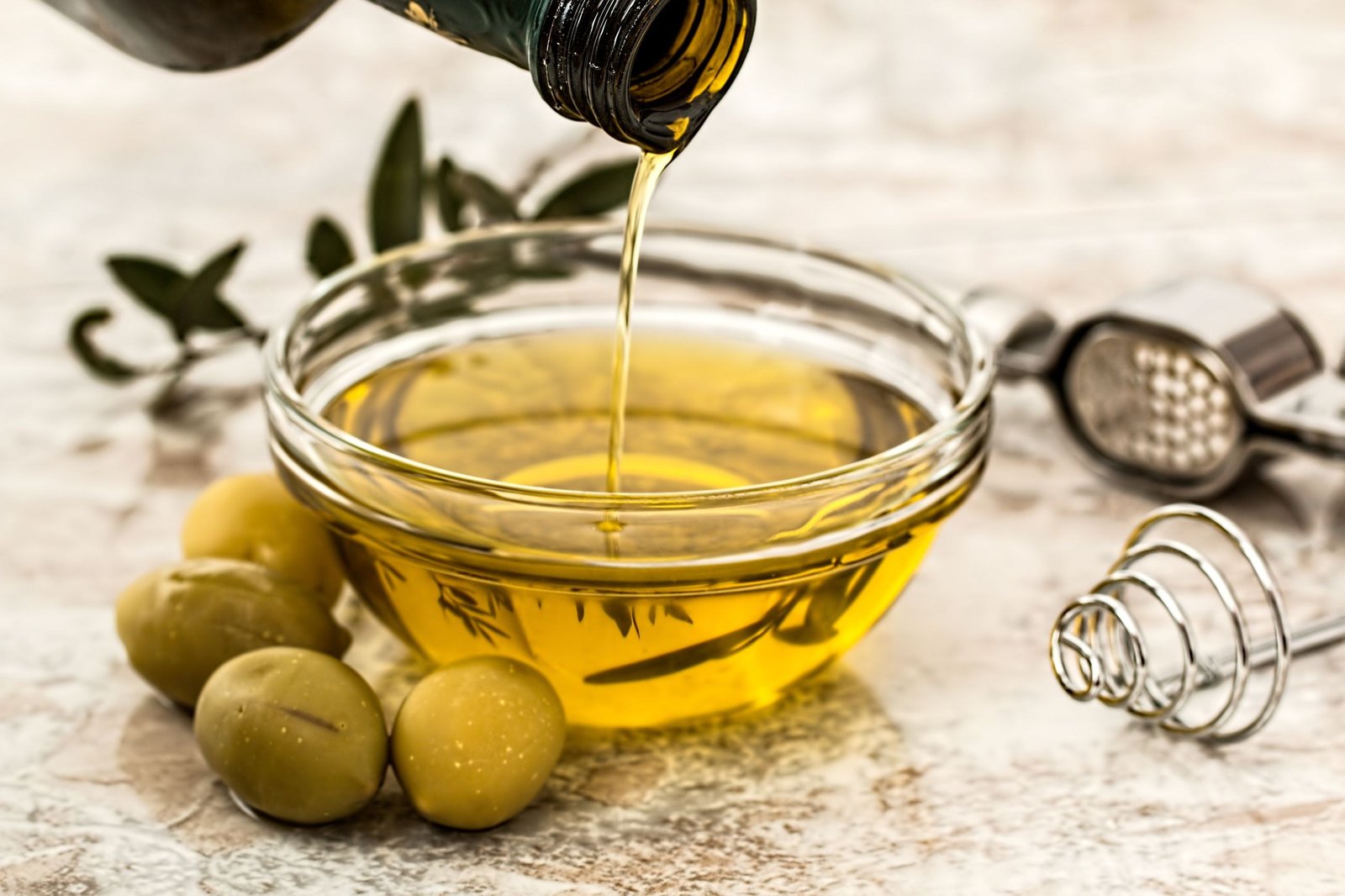
Few foods have as much serious research behind them as extra virgin olive oil. It is the backbone of the Mediterranean diet, the subject of one of the largest nutrition trials ever run, and increasingly a luxury product in its own right, with single-estate bottles that are judged like fine wine. This guide summarizes what the major studies say about olive oil and men’s health (heart health, longevity, cholesterol, polyphenols and the much-asked question of testosterone) and explains how to choose a genuinely excellent extra virgin olive oil.
This article summarizes published research for general information. It is not medical advice. If you have a heart condition, high cholesterol or another health issue, talk to your doctor before changing your diet.
Key takeaways
- PREDIMED: in 7,447 people at high cardiovascular risk, a Mediterranean diet supplemented with extra virgin olive oil was linked to about 30% fewer major cardiovascular events than a reduced-fat control diet.
- Harvard cohorts: more than half a tablespoon of olive oil a day was associated with a 19% lower risk of death from any cause over 28 years.
- Men with heart disease: in the CORDIOPREV trial, a Mediterranean diet rich in EVOO outperformed a low-fat diet for preventing new cardiovascular events, with the clearest benefit in men.
- Polyphenols matter: in the EUROLIVE trial in 200 healthy men, HDL cholesterol rose in line with the oil’s polyphenol content.
- Testosterone: one small, short study reported higher testosterone after three weeks of EVOO; the evidence is too limited for firm conclusions.
- Choose: extra virgin, a recent harvest date, dark glass or tin, and ideally a stated polyphenol count.
Why Olive Oil Is Different From Other Fats
Olive oil is pressed from fruit rather than extracted from seeds with solvents. Extra virgin olive oil (EVOO) is the highest grade: it is obtained by mechanical means only and must meet strict chemical and sensory standards. The International Olive Council, which sets the global trade standard, requires extra virgin olive oil to have a free acidity of no more than 0.8 g per 100 g; virgin olive oil may have up to 2 g.
Original article: Olive oil – International Olive Council
Two features make EVOO special. First, it is rich in monounsaturated fat, mostly oleic acid. Second, unlike refined oils, it keeps the fruit’s polyphenols: bitter, peppery antioxidant compounds such as hydroxytyrosol and oleocanthal that give fresh oil its characteristic bite at the back of the throat.
The US Food and Drug Administration recognized the oleic acid part of the story in 2018, when it allowed a qualified health claim: supportive but not conclusive evidence suggests that daily consumption of oils containing at least 70% oleic acid, used in place of fats higher in saturated fat, may reduce the risk of coronary heart disease.
Original article: FDA Completes Review of Qualified Health Claim Petition for Oleic Acid and the Risk of Coronary Heart Disease – US FDA
PREDIMED: The Landmark Olive Oil Trial
PREDIMED (Prevención con Dieta Mediterránea) is the study most people mean when they say olive oil is good for the heart. Spanish researchers enrolled 7,447 men and women aged 55 to 80 who did not have cardiovascular disease but were at high risk. Participants were assigned to a Mediterranean diet supplemented with extra virgin olive oil, a Mediterranean diet supplemented with mixed nuts, or a control diet with advice to reduce dietary fat.
Over a median of about 4.8 years, major cardiovascular events (heart attack, stroke or death from cardiovascular causes) occurred in 3.8% of the olive oil group, 3.4% of the nut group and 4.4% of the control group. Compared with the control diet, the EVOO group had a hazard ratio of 0.69, roughly a 31% lower risk, and the nut group 0.72.
An important detail for anyone reading older articles: the original 2013 PREDIMED paper was retracted after irregularities were found in how some participants were randomized. The authors reanalyzed the data and republished it in 2018; the conclusions were broadly unchanged. The 2018 paper above is the version to cite.
Olive Oil and Longevity: The Harvard Cohorts
PREDIMED was a trial in older, high-risk Spaniards. A large American analysis asked whether the pattern holds in the US. Researchers at the Harvard T.H. Chan School of Public Health followed 60,582 women and 31,801 men from the Nurses’ Health Study and the Health Professionals Follow-up Study for 28 years.
Those who consumed more than half a tablespoon (about 7 g) of olive oil a day had a 19% lower risk of death from any cause and a 19% lower risk of cardiovascular death than those who rarely or never used it. They also had a 17% lower risk of cancer death, a 29% lower risk of death from neurodegenerative disease and an 18% lower risk of respiratory death. Statistically replacing 10 g a day of margarine, butter, mayonnaise or dairy fat with olive oil was associated with an 8 to 34% lower risk of death. No significant difference was seen when olive oil replaced other vegetable oils.
As an observational study, this cannot prove cause and effect: olive oil users may differ in other ways. But it is consistent with the trial evidence, and the message is practical: olive oil works best as a replacement for butter and other saturated fats, not as an addition on top of them.
CORDIOPREV: Olive Oil for Men With Heart Disease
The CORDIOPREV trial in Córdoba, Spain, is particularly relevant to men. It enrolled 1,002 patients with established coronary heart disease, 82.5% of them men, and followed them for seven years on either a Mediterranean diet rich in extra virgin olive oil or a low-fat diet.
Major cardiovascular events occurred in 87 participants on the Mediterranean diet and 111 on the low-fat diet. The effect was most evident in men: 16.2% of men on the Mediterranean diet had an event compared with 22.8% on the low-fat diet, a hazard ratio of 0.669.
Polyphenols: Why Quality Matters
Not all olive oils are equal, and the EUROLIVE trial showed why. Researchers gave 200 healthy European men 25 mL (about two tablespoons) a day of three olive oils that were similar in fat composition but differed in polyphenol content: low (2.7 mg/kg), medium (164 mg/kg) and high (366 mg/kg). HDL (“good”) cholesterol increased in line with the oil’s polyphenol content, the total-to-HDL cholesterol ratio fell, and markers of oxidative stress on blood lipids decreased as polyphenol content rose.
Original article: Covas et al., The effect of polyphenols in olive oil on heart disease risk factors: a randomized trial – Annals of Internal Medicine 2006, via PubMed
That is the scientific argument for paying more for a fresh, early-harvest extra virgin olive oil. Refined “light” olive oils lose most of their polyphenols, and even good EVOO loses them as it ages and is exposed to heat, light and air.
Olive Oil and Testosterone: What the Evidence Says
Men often ask whether olive oil raises testosterone. The honest answer: there is very little human evidence. The study most often cited is a small trial from Morocco in which 60 healthy men aged 23 to 40 replaced butter with 25 mL a day of extra virgin olive oil for three weeks. Their testosterone rose by 17.4% and luteinizing hormone by 42.6%.
That is interesting, but it was small, short and not designed to show long-term effects. It does not support olive oil as a testosterone treatment. A more defensible conclusion is that olive oil supports the cardiovascular and metabolic health that underpins healthy hormone levels in men, alongside sleep, training and a healthy body weight.
How Much Olive Oil Per Day?
The major studies give a useful range rather than a prescription:
- Harvard cohorts: benefits were seen above about half a tablespoon (7 g) per day.
- EUROLIVE: 25 mL, roughly two tablespoons, per day.
- PREDIMED: participants in the olive oil group received about one liter of extra virgin olive oil per week for their household and were encouraged to use at least four tablespoons a day.
Olive oil is energy-dense (about 120 calories per tablespoon), so the point is to use it instead of other fats: dress salads with it, finish vegetables and fish with it, and use it in place of butter.
How to Choose a Premium Extra Virgin Olive Oil
Great olive oil is a fresh fruit juice, and like any luxury food it rewards a careful buyer. Look for:
- “Extra virgin” on the label. Avoid “pure,” “light” or simply “olive oil,” which are refined blends.
- A harvest date, not just a best-before date. Buy the most recent harvest; olive oil is best within about a year and a half of harvest and soon after opening.
- Dark glass or tin. Light degrades oil and its polyphenols. Avoid clear bottles.
- Origin and variety. Single-estate or protected-origin oils (PDO/PGI) with named varieties such as Picual, Koroneiki, Arbequina, Coratina or Ayvalık offer traceability.
- Lab data. The best producers publish free acidity (well below the 0.8% limit) and polyphenol counts. Above roughly 250 mg/kg is a good sign.
- Taste. Fresh EVOO smells green and fruity (cut grass, green tomato, artichoke) and tastes pleasantly bitter with a peppery catch in the throat. Rancid, waxy or crayon-like notes mean it is past its best.
Storage: keep it in a cool, dark cupboard away from the stove, close the bottle tightly and use it within a couple of months of opening.
Premium Olive Oils Worth Buying
Prices were checked on the sellers’ websites while this guide was prepared and may change.
Brightland Awake Extra Virgin Olive Oil
Brightland’s most robust, highest-polyphenol oil, made from early-harvest, cold-pressed California Arbequina and Lecciana olives. The brand states a polyphenol count of 290 to 350 and free fatty acids of 0.11%, and bottles it in UV-coated glass.
Price: $38 (375 mL) – Awake Extra Virgin Olive Oil – Brightland
Castillo de Canena Family Reserve Picual
An estate-bottled Spanish Picual from a family that has produced olive oil since 1780. The olives are hand-harvested and milled within three hours; the oil is intensely fruity with a strong balance of bitterness and pungency.
Price: $46 (500 mL, City Olive) – Castillo de Canena Family Reserve Picual – City Olive
Frequently Asked Questions
Is olive oil good for men’s heart health?
Yes, according to the strongest evidence available. In PREDIMED, a Mediterranean diet with extra virgin olive oil was linked to about 30% fewer major cardiovascular events, and in CORDIOPREV it outperformed a low-fat diet in men with heart disease.
How much olive oil should I eat per day?
Studies saw benefits from more than half a tablespoon a day (Harvard) up to about two to four tablespoons (EUROLIVE, PREDIMED), used in place of butter and other saturated fats.
Does olive oil increase testosterone?
One small three-week study in 60 Moroccan men reported a 17% rise in testosterone after replacing butter with EVOO. That is not enough evidence to call olive oil a testosterone booster.
Why is extra virgin olive oil better than regular olive oil?
Extra virgin oil is unrefined and keeps its polyphenols. In the EUROLIVE trial, HDL cholesterol rose in line with the oil’s polyphenol content.
What does a high-polyphenol olive oil taste like?
Green, fresh and bitter, with a peppery sting in the throat caused largely by oleocanthal. That bite is a sign of quality, not a flaw.
Can you cook with extra virgin olive oil?
Yes. Good EVOO is stable for everyday cooking such as sautéing and roasting; reserve your most expensive, highest-polyphenol bottle for drizzling raw to enjoy its full flavor.
Final Word
Extra virgin olive oil is one of the rare luxuries that is also backed by decades of hard science. Make it your default fat, buy fresh oil with a recent harvest date and real lab data, store it properly and use it generously in place of butter. It will not replace exercise, sleep or medical care, but as part of a Mediterranean way of eating, it is one of the most enjoyable investments a man can make in his long-term health.
This article is for general information only and does not replace advice from a doctor, dietitian or other qualified health professional.