
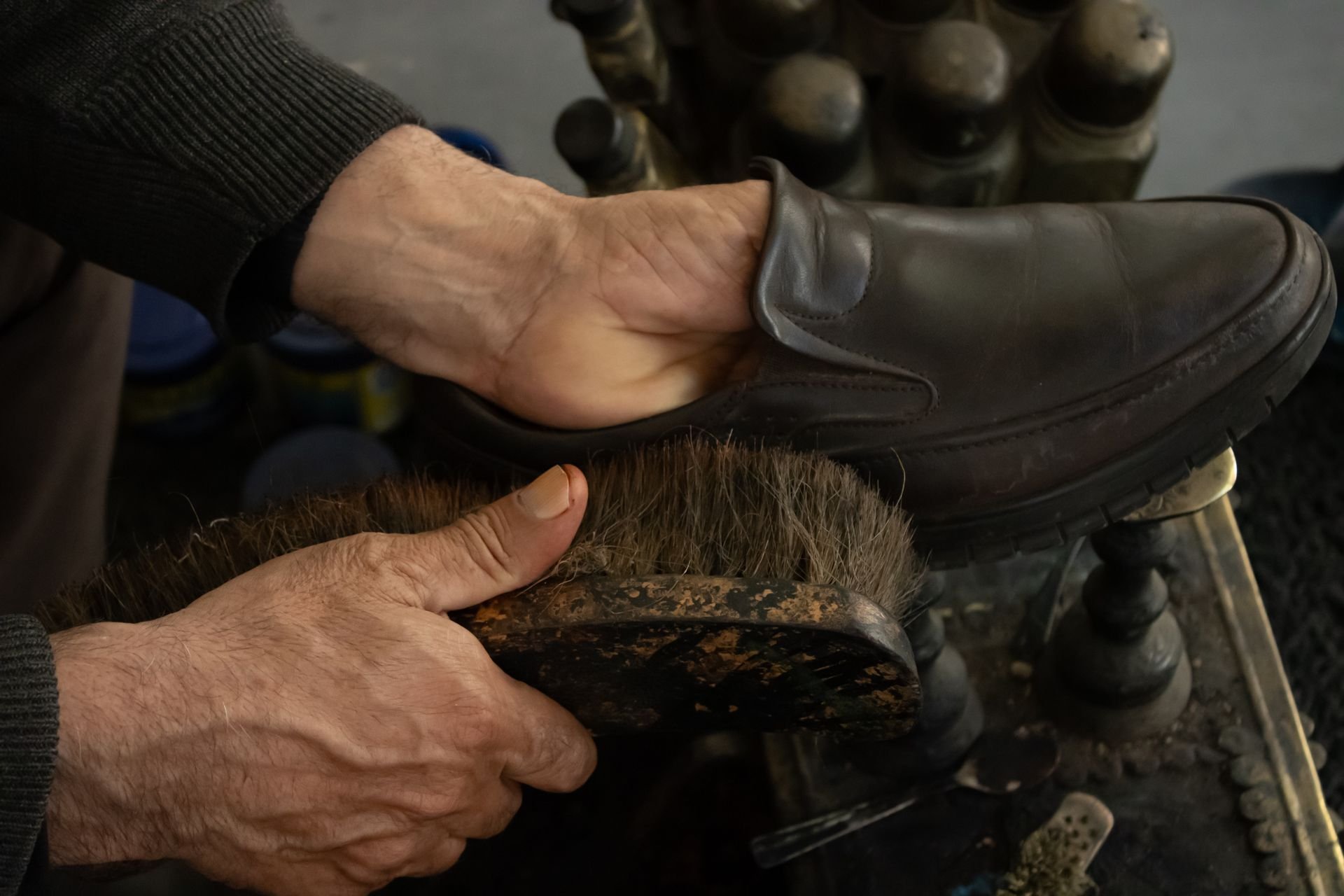
A good pair of shoes is the quiet signature of a well-dressed man, and winter is the season that tests it hardest. Road salt, slush and the radiator by the front door can undo years of patina in a single week. Here is the winter shoe care routine that keeps fine leather and suede looking sharp until spring, built from shoe restorers, leather specialists and the most obsessive shoe forum on the internet.
1. Rule One: Let Wet Shoes Dry Slowly, Never Near Heat
Every expert source agrees on the first step. Wet leather shoes should dry at room temperature, away from radiators, open fires and direct sunlight, with cedar shoe trees inside to absorb moisture and hold the shape. UK maker John White adds a key detail: never apply any cream or treatment to damp leather, because it traps moisture inside the fibers. Esquire puts it more bluntly: do not aim a hair dryer at your shoes, or the leather may crack.
Why it matters: heat pulls the natural oils out of leather fast. That is what turns a soft calfskin upper into something stiff, dull and prone to cracks at the flex points.
Original article: John White Shoes
2. How to Remove Salt Stains from Leather Shoes
The classic method still works best. Footwear restoration expert Devonn Vidal told Martha Stewart to wipe smooth leather with a soft cloth dampened in equal parts water and white vinegar, let it air-dry, then apply leather conditioner. John White’s version adds a pro move: work from the inside of the white tide mark outward, then “feather” the damp cloth into the surrounding leather so no new ring forms as it dries.
Finish every salt treatment with a conditioner, then a cream or wax polish in the matching color. Both salt and vinegar dry out leather, so the conditioning step is not optional.
Original article: Martha Stewart
3. The Salt Stain Myth Most Men Believe
Here is a detail few men know. According to Vince Camuto’s leather specialist Ademir Colla, rock salt alone does not create those white marks. The stains form when wet leather dries and pulls up materials used in the tanning process, which leaves the filmy white lines on the surface. The same guide warns against household cleaners on salt marks, because they can strip and discolor fine leather.
There is a second lesson in that article: a water-repellent spray gives water resistance, not waterproofing. Truly waterproof leather is made in the tannery, not with a spray can.
Original article: Vince Camuto
4. Protect Before the First Snow, Then Reapply
Prevention beats repair. Esquire’s cleaning columnist recommends a protective spray on every pair of winter footwear and gives a clear rhythm: reapply every six months, and again after a professional cleaning, since cleaning strips the old coating. Vince Camuto suggests misting shoes you wear twice a week once a month, and every two weeks in harsh conditions.
Two small rules make the difference. Always spot-test a spray on a hidden area such as the heel counter, and apply repellent to clean, unpolished leather before you shine it. A layer of wax polish on top adds another barrier against slush.
Original article: Esquire
5. Suede in Winter: Dry Brush First, Water Last
Suede and nubuck need a different approach. Let them dry completely, brush gently with a suede brush, and use a suede eraser to lift salt lines, says Vidal. Water-based scrubbing on suede usually makes a stain worse, because it flattens the nap and leaves dark patches.
The 2026 winter guide from Canadian shoe care brand Walter’s adds the finish: once clean and dry, spray a suede protector evenly from about 20 to 30 cm (8 to 12 inches) away and let it cure for at least 30 minutes before you wear the shoes. If you love your dark brown suede Chelsea boots, save them for dry, cold days when the sidewalks are heavily salted.
Original article: Walter’s Shoe Care
6. Rubber Soles for Slush, Leather Soles for Dry Days
Esquire’s guide to the best waterproof Chelsea boots for fall 2026 makes a simple point about the sole. Leather soles are the more formal choice, but they are porous: in rain they soak up water, soften and get torn up by concrete. Once the salt trucks are out, keep leather-soled shoes far away from the street and choose rubber soles instead.
The enthusiasts on Reddit’s r/goodyearwelt say much the same. For snow and ice, they favor storm-welted boots with Dainite or Commando rubber soles, which keep the clean look of a dress boot with far more grip.
Original article: Esquire
7. Rotation and Cedar Shoe Trees: The Habit Behind Every Great Pair
The most underrated winter shoe care tip costs nothing: do not wear the same pair two days in a row. Rotating between at least two pairs lets each one dry fully between wears, which John White calls fundamental to long-term shoe care. Cedar shoe trees go in after every wear, because cedar absorbs leftover moisture, including perspiration salts from inside the shoe.
The same guide notes that the Leather Conservation Centre recommends conditioning leather every six to eight weeks in normal use, and after every salt-stain treatment. In a hard winter, that rhythm should get shorter, not longer.
Original article: Reddit r/goodyearwelt
The 10-Minute Winter Shoe Care Routine
- After every wear: wipe off salt with a slightly damp cloth, then insert cedar shoe trees.
- If soaked: blot dry, stuff loosely with paper, and let the shoes dry for 24 hours at room temperature.
- Salt marks on leather: water and white vinegar, feathered out, then conditioner and polish.
- Salt marks on suede: dry brush, suede eraser, then protector spray.
- Every few weeks: condition, polish, and refresh the water repellent.
Product Picks: Premium Winter Shoe Care
- Crockett & Jones Men’s Shoe Trees, $170. From the Northampton shoemaker, a fitting partner for any fine Goodyear-welted pair. Crockett & Jones US
- Saphir Médaille d’Or Renovateur, $30. The beeswax, lanolin and mink oil cream that leather specialists treat as the gold standard for cleaning and nourishing smooth leather after a salty week. Crockett & Jones US
- Crockett & Jones Shoe Brush, Sanded Beech, Medium, $32. A proper wooden brush for daily dusting and buffing, so salt never gets the chance to set. Crockett & Jones US
- Saphir Médaille d’Or Renovétine, €17.50. Saphir’s spray for suede and nubuck that cleans, refreshes the color, nourishes and adds water resistance. Saphir
FAQ: Winter Shoe Care
How do you remove salt stains from leather shoes?
Let the shoes dry fully, brush off loose salt, then wipe the marks with a cloth dampened in equal parts water and white vinegar. Feather the cloth outward to avoid new rings, let the leather air-dry, then condition and polish.
Can you use a hair dryer to dry wet leather shoes?
Experts advise against it. Direct heat pulls the oils out of leather and can make it crack. Dry shoes at room temperature with cedar shoe trees or loosely stuffed paper instead.
How often should you waterproof leather shoes in winter?
Esquire recommends reapplying a protective spray at least every six months and after professional cleaning. For shoes worn often in harsh winter weather, Vince Camuto suggests a light coat every two to four weeks.
Are leather soles OK in snow and salt?
Leather soles are porous and suffer in wet, salty conditions. For slushy days, rubber soles such as Dainite or Commando are the smarter choice, and leather-soled dress shoes are best kept for dry days.