When the temperature drops, every man faces the same question at the front door: beanie or hat? A soft cashmere beanie, a fur felt fedora and a tweed flat cap all keep your head warm, but they say very different things. One is relaxed and sporty, one is elegant and deliberate, and one sits somewhere in between. This guide explains when to wear a knit beanie versus a felt hat or a flat cap, how to pair each with your coats, what really matters for warmth, how headwear affects your hair and beard, and which premium makers are worth your money this winter.
Key takeaways
- Beanie = casual and practical. Wear it with parkas, peacoats, puffer and field jackets, chunky knits and weekend clothes, and whenever it is genuinely cold, windy or wet.
- Felt hat = smart and deliberate. A fur felt fedora belongs with overcoats, tailoring, Chesterfields and camel coats; it is the most formal option here.
- Flat cap = the bridge. Lock & Co. places it in the smart-casual space: tweed for the country, cashmere or fine wool for city tailoring.
- Warmth: your head is not a special heat leak; a hat helps because it covers exposed skin. Choose the hat that suits the outfit and the forecast.
- Hair: hats do not appear to cause hair loss in normal use, but very tight or hot hats are best avoided. A looser knit means less “beanie hair.”
The Short Answer: Match the Hat to the Coat
The easiest rule is to let your outerwear decide. Headwear should share the formality of the coat beneath it:
| Coat | Best headwear | Why |
|---|---|---|
| Tailored overcoat, Chesterfield, camel coat | Fur felt fedora, cashmere flat cap | Matching formality and structure |
| Tweed jacket, waxed jacket, Barbour-style coat | Tweed flat cap | Country heritage, same textures |
| Peacoat, duffle coat | Flat cap or ribbed beanie | Both work; the beanie is more relaxed |
| Parka, puffer, ski or field jacket | Knit beanie | Sporty, practical, packable |
| Leather or suede jacket | Beanie or flat cap | Casual texture, casual hat |
A cashmere beanie can, however, be worn with a good wool overcoat. It is a modern, understated look that many stylish men favor for the commute. The opposite rarely works: a fedora with a puffer jacket looks like a costume.
When to Wear a Knit Beanie
The beanie is the most practical winter hat ever made. It folds into a pocket, covers your ears, stays put in the wind and looks equally right on a ski lift or in a city street. That practicality is also its limit: it is a casual accessory and should be treated as one.
Wear a beanie when:
- It is genuinely cold, windy or snowing, and you need your ears covered.
- You are wearing casual or sporty outerwear: parkas, puffers, field jackets, chore coats, leather jackets.
- You are traveling, walking the dog, hiking or spending the weekend outdoors.
- You want a relaxed but polished commuter look with a dark wool coat (choose fine cashmere or merino, not a chunky acrylic knit).
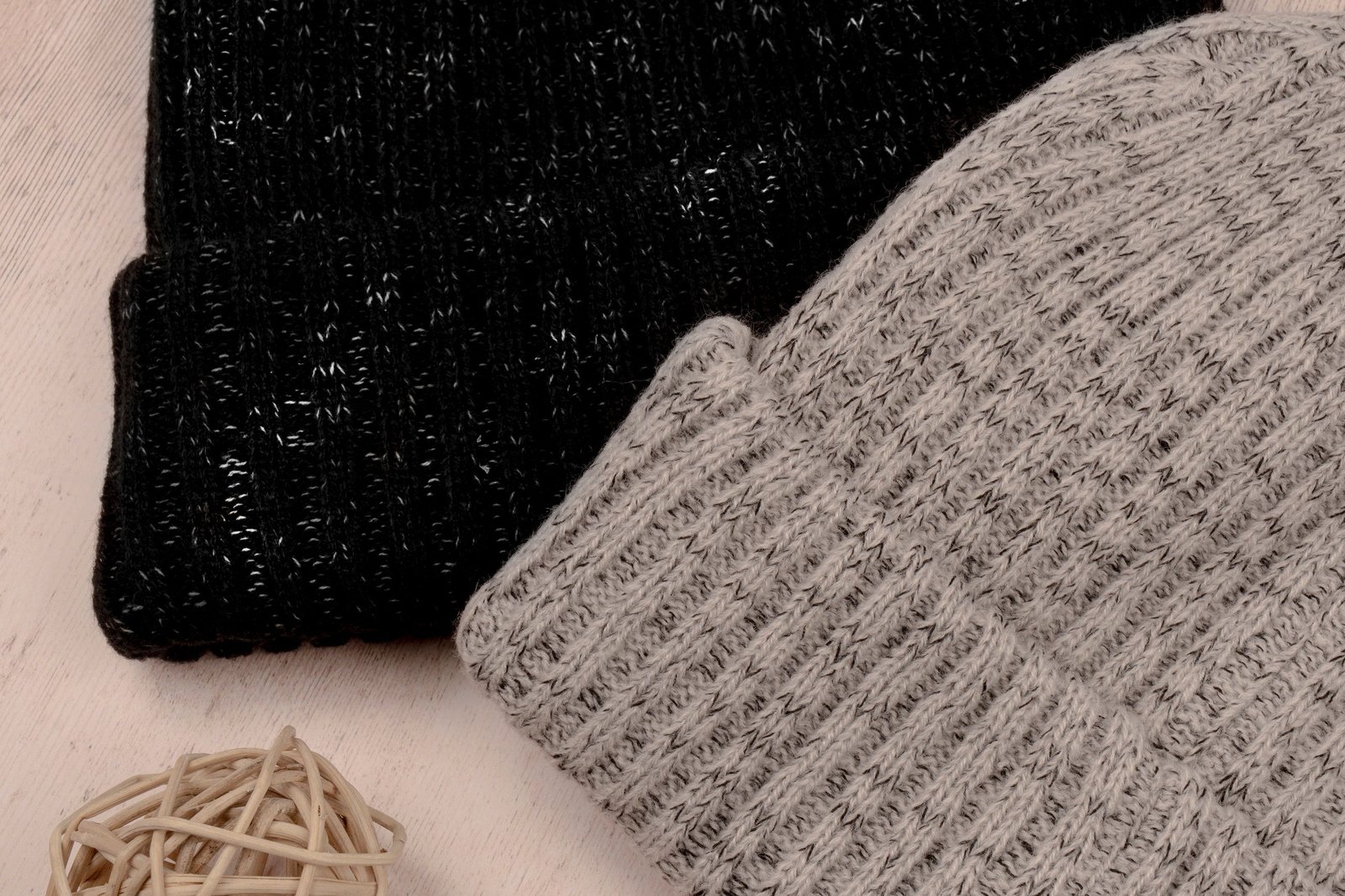
How a beanie should fit: snug but not tight, sitting just above the eyebrows and covering the tops of your ears. A cuffed rib is the most versatile; fisherman styles (short and above the ears) are more fashion-forward. Stick to navy, charcoal, camel, cream, forest green or black.
Cashmere, Merino or Lambswool?
For a luxury beanie, fiber matters more than brand. Cashmere is the softest and warmest for its weight; merino is fine, breathable and naturally odor-resistant; lambswool is slightly coarser and more rustic but very warm. Avoid synthetic blends if you want a beanie that looks better with age instead of pilling after a month.
When to Wear a Felt Hat
The felt hat (fedora, trilby, homburg) is the most elegant way to keep your head warm. It shades your face, sheds light rain, frames a well-groomed beard and instantly signals that you dressed with intent.
Wear a felt hat when:
- You are wearing a tailored overcoat, a Chesterfield, a camel coat or a suit.
- The occasion is smart: a business meeting, a dinner, the theater, a wedding or an evening in an old coffeehouse.
- It is cool and dry or lightly drizzling rather than stormy. A felt hat is a poor friend in strong wind.
How to choose one: fur felt (rabbit or beaver) is denser, smoother and more weather-resistant than wool felt and holds its shape far longer. Classic colors are dark brown, charcoal, navy and mid-grey. A brim of around 2 to 2½ inches suits most men; broader faces and taller men can go wider. Stetson’s Stratoliner, made since 1940, is a good reference: a 4½-inch teardrop crown, a 2½-inch bound-edge brim, fur felt and a leather sweatband.
Original article: Stratoliner Fedora – Stetson
When to Wear a Flat Cap
If the beanie is casual and the fedora is formal, the flat cap is the gentleman’s middle ground. Lock & Co., the London hatter founded in 1676, describes it as a rounded, soft-crowned hat with a short, stiff brim that first appeared in Northern England in the 14th century and became part of British and Irish life after a 1571 law encouraged men of the working classes to wear it.
Original article: How to Wear & Style a Flat Cap – Lock & Co. Hatters
According to Lock & Co., flat caps sit in the smart-casual space and the material dictates the formality: tweed and linen lean casual, cashmere and fine wool work with city tailoring, and leather or suede add a fashion-forward edge. The hatter recommends wearing a flat cap level and straight, just above the eyebrows, hugging the head gently without pinching. Its suggested pairings are a helpful cheat sheet: a tweed cap with a wax jacket and dark denim for a country weekend, a wool cap with a pea coat and leather gloves for a polished winter commute, and a cashmere cap with a tailored overcoat and brogues for smart city style.
Wear a flat cap when:
- You want something smarter than a beanie but less formal than a fedora.
- You are wearing tweed, corduroy, a waxed jacket or a peacoat.
- You are traveling: a flat cap keeps your head warm on trains and planes and slips into a coat pocket.
Warmth: Do You Really Lose Most Heat Through Your Head?
You have probably heard that you lose 40 to 50 percent of your body heat through your head. Pediatricians Rachel Vreeman and Aaron Carroll examined this claim in the BMJ’s 2008 “Festive medical myths” article and found it does not hold up: the figure goes back to cold-exposure experiments in which the head was the main uncovered part of the body. Heat loss depends on how much skin is exposed and poorly insulated, not on the head being special.
Original article: Festive medical myths – BMJ 2008, via PubMed
What does that mean for your choice? Any hat helps when your head is exposed to the cold, but the beanie wins in harsh weather because it covers the ears and seals against the wind. A felt hat keeps the crown warm and dry but leaves the ears exposed; on very cold days pair it with a cashmere scarf turned up at the collar. A lined, showerproof flat cap is a good compromise in damp weather.
Hair and Hat Hair: What Headwear Does to Your Hair
Does wearing a hat cause hair loss?
According to Cleveland Clinic dermatologist John Anthony, the question has not been well studied. Two twin studies are most often cited: in neither was hat-wearing associated with worse hair thinning, and men who wore a hat every day actually had less hair loss at the temples than their twins who did not. Dr. Anthony does add a caveat: very tight or very hot hats could, in theory, reduce blood flow to the follicles or create tension, and he suggests that a loosely fitting option may be the safer bet than a tight knit cap.
Original article: Can Wearing a Hat Cause Hair Loss? – Cleveland Clinic
How to avoid beanie hair
GQ asked barbers and grooming experts how to beat flattened “beanie hair.” Their advice: never put a beanie on wet or damp hair, choose a looser fit and looser weave, sweep your hair back and pull the beanie on from forehead to nape, keep a water-soluble styling product or travel-size cream at the office, and remember that shorter cuts and tapered sides recover fastest.
Original article: How to Wear a Beanie Without Ruining Your Hair – GQ
A felt hat is kinder to your hairstyle than a tight knit, because it sits on the head at the sweatband rather than pressing the whole crown flat. A flat cap sits somewhere in between.
Hats and Beards: Getting the Proportions Right
Headwear and beards both frame the face, so they need to be in balance:
- Full beard: a fur felt fedora with a medium brim or a substantial tweed flat cap balances the volume. A tiny beanie perched high can make the face look bottom-heavy; pull it down to the eyebrows.
- Short boxed beard or stubble: everything works. A fine cashmere beanie looks especially sharp.
- Grey or salt-and-pepper beard: charcoal, navy and mid-grey felts and knits pick up the silver; camel and brown warm it.
- Long hair and beard: a slightly slouchy beanie or a flat cap avoids squashing your hair; GQ’s experts note that a looser beanie is gentler on longer styles.
Keep beard oil off felt and cashmere: apply it before you dress and let it absorb.
Etiquette: One Rule to Remember
Whatever you wear, the same indoor etiquette applies: men traditionally remove a beanie, flat cap or fedora indoors in homes, restaurants, coffeehouses and offices. We covered the full rules in our guide to gentleman’s hat etiquette indoors.
Premium Makers Worth Knowing
- Stetson (USA): the classic American felt hat maker; fur felt fedoras handmade in Texas.
- Lock & Co. Hatters (London): founded in 1676 and widely regarded as the oldest hat shop in the world, still trading from 6 St James’s Street; superb flat caps and felt hats.
- Borsalino (Italy): the legendary Alessandria hatter, famous for its rabbit fur felts.
- Todd Snyder (USA): refined American menswear with excellent cashmere knit accessories.
Our Premium Picks
Prices were checked on the makers’ websites while this guide was prepared and may change.
Stetson Stratoliner Fedora
The quintessential American fedora since 1940: fur felt, teardrop crown, bound-edge brim, leather sweatband and satin lining, handmade in the USA.
Price: $280 – Stratoliner Fedora – Stetson
Lock & Co. Turnberry Wool Tweed Flat Cap
A showerproof, fully lined wool tweed flat cap, handcrafted on a wooden block in the house that has been making hats since 1676.
Price: £275 including UK VAT – Turnberry Tweed Flat Cap – Lock & Co. Hatters
Todd Snyder Cashmere Beanie, Navy
A ribbed, fold-over beanie in 100% cashmere: warm and light without being itchy or overly hot. The easiest way to upgrade a winter commute.
Price: $118 – Cashmere Beanie in Navy – Todd Snyder
Frequently Asked Questions
Is a beanie or a fedora better with an overcoat?
A fedora is the classic choice with a tailored overcoat. A fine cashmere beanie also works for a modern, understated commute, but a chunky sporty knit does not.
Can you wear a beanie with a suit?
Yes, if the beanie is fine cashmere or merino in a dark neutral and you are wearing an overcoat. Take it off indoors.
Which hat is warmest in winter?
A close-fitting knit beanie, because it covers the ears and seals out wind. A felt hat keeps your head dry but leaves your ears exposed.
Does wearing a hat every day cause hair loss?
There is no clear evidence that normal hat-wearing causes hair loss. Cleveland Clinic notes that very tight or hot hats could stress follicles, so a looser fit is the safer bet.
Is a flat cap casual or formal?
Smart casual. Tweed caps lean country and casual; cashmere and fine wool caps work with overcoats and tailoring.
How do I avoid hat hair from a beanie?
Make sure your hair is completely dry, choose a looser knit, pull the beanie on from forehead to nape and keep a water-soluble styling product to reset your hair.
Final Word
The beanie, the felt hat and the flat cap are not rivals but tools. Reach for the beanie when the weather is harsh and the clothes are casual, the felt hat when the coat is tailored and the evening matters, and the flat cap for everything in between. Choose noble fibers (cashmere, fur felt, pure wool tweed), get the fit right, and your winter headwear will finish an outfit the way a well-shaped beard finishes a face.