
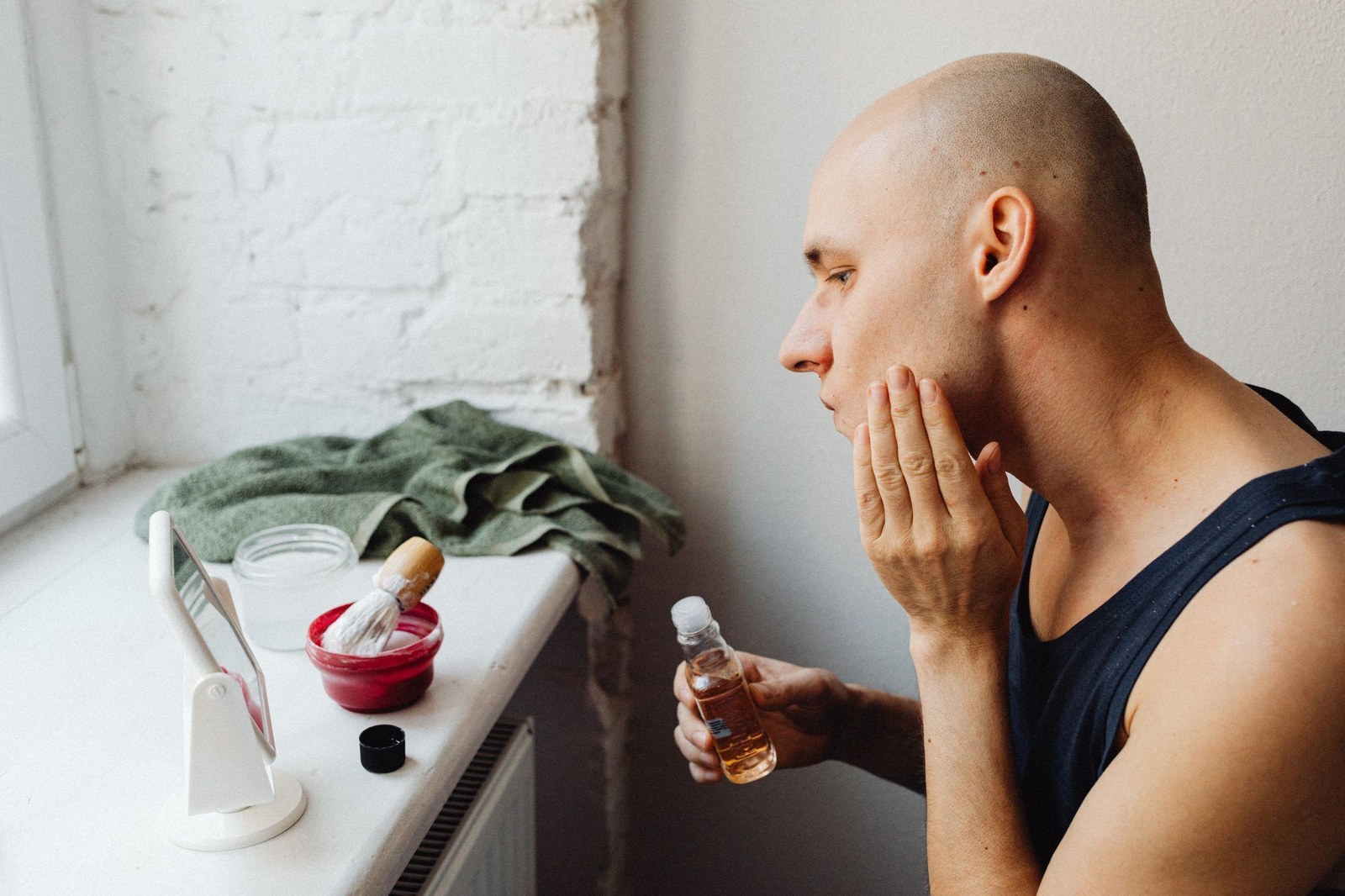
Retinol for men is no longer a niche bathroom secret. Dermatologists now describe vitamin A derivatives as the one active ingredient worth adding once cleanser, moisturizer and sunscreen are in place, and men’s grooming editors have followed suit. Yet most guys who “tried retinol” quit after two weeks of flaking, stinging and a tight, shiny face. The problem is rarely the ingredient. It is the strength, the frequency and the timing, especially in winter, when heated rooms and cold wind already push the skin barrier to its limit.
This guide explains the retinoid ladder (retinol vs retinal vs tretinoin and adapalene), how to start retinol in winter without the dreaded “retinol uglies,” how to combine a retinoid with shaving and a beard, and which premium serums are worth a place on a well-edited shelf.
Key takeaways
- Retinoids are a ladder: retinol needs two conversion steps in the skin, retinal (retinaldehyde) needs one, and prescription tretinoin is already retinoic acid. Stronger means faster, but also more irritating.
- Start low and slow: a pea-sized amount for the whole face, one to three nights a week, on clean and fully dry skin, then build up over several weeks.
- Expect an adjustment phase: dryness, mild redness and flaking (“retinization”) usually settle after about four to six weeks.
- Sunscreen is non-negotiable: retinoids increase sun sensitivity, so a broad-spectrum SPF 30 or higher every morning, even in December.
- Shave and retinoid on a schedule: never apply a retinoid to freshly shaved, nicked or razor-burned skin; shave in the morning, retinoid at night.
- Patience pays: texture improves in weeks, fine lines take three to six months, and the best results show after six to twelve months of consistent use.
Why Retinol Is the Anti-Aging Ingredient Dermatologists Recommend to Men
Men’s skin is, on average, thicker and oilier than women’s, but the biology of retinoids does not change with gender. Retinol is converted in the skin into retinoic acid, the biologically active form of vitamin A, which regulates cell turnover, supports collagen production and slows collagen breakdown. With consistent use, dermatologists interviewed by Men’s Health say it can soften fine lines and wrinkles, refine rough texture, even out pigmentation and make enlarged pores look less obvious. One cosmetic dermatologist calls it the “Swiss Army knife” of skincare, which is exactly why it suits men who want a short, effective routine rather than a ten-step ritual.
There is also no need to hunt for a product labeled “for men.” As one dermatologist puts it in the same article, skin is skin. What matters is your skin type, how sensitive it is and what you want to improve: forehead lines, crow’s feet, sun spots from summers on the water, or the congestion and breakouts that often linger in the beard line.
When should men start retinol?
There is no magic birthday. Men in their twenties may already use a retinoid for acne, while the late twenties and thirties are a sensible time to build a consistent anti-aging habit, because collagen production slowly declines with age. Men in their forties and fifties who notice etched lines, rough texture or uneven tone after years of sun exposure can still benefit. Retinol complements sunscreen; it does not replace it.
Original article: Men’s Health
Retinol vs Retinal vs Tretinoin vs Adapalene: The Retinoid Ladder Explained
“Retinoid” is the umbrella term for every vitamin A derivative used on skin. The differences between them come down to how many steps the skin needs to turn them into retinoic acid, and that number largely predicts both power and irritation.
Retinol: the refined entry point
Retinol is the over-the-counter classic. It requires two conversion steps (retinol to retinal, retinal to retinoic acid), which makes it gentler and generally well tolerated by most skin types. It is the logical first step for men new to vitamin A, and for anyone with sensitive or dry skin.
Retinal (retinaldehyde): the next level
Retinal, sometimes written retinaldehyde, is only one step away from retinoic acid. It works faster than retinol and has become one of the most talked-about cosmetic actives of the last few years. It is still sold without a prescription, which makes it the natural upgrade once your skin tolerates retinol well.
Adapalene and tretinoin: the prescription-strength tier
Adapalene, long known under the brand name Differin, is now available over the counter in the US and is primarily an acne treatment. Tretinoin is retinoic acid itself and remains prescription-only. According to GQ, users typically begin at 0.025 percent and may graduate to 0.05 and 0.1 percent if their skin adapts. Mayo Clinic lists tretinoin, tazarotene and adapalene among the prescription-strength options a doctor may suggest for fine wrinkles and blotchy pigmentation, and notes that improvement can take weeks to months.
Why the highest percentage is not the best choice
GQ makes a point that every dermatologist repeats: a higher percentage does not automatically mean a better product. The type of retinoid, the formulation and how consistently you use it matter far more. A strong serum that irritates your skin so much that you stop after two weeks does nothing; a gentler formula you use for a year almost always wins. Serums tend to suit oily or acne-prone skin, while creams and overnight lotions add moisture for dry or sensitive skin.
Original article: GQ
How to Start Retinol in Winter Without Wrecking Your Skin Barrier
Winter is a popular moment to start a retinoid, because UV exposure is lower and many men spend less time outdoors. But cold air outside and dry, heated air inside can make the adjustment phase rougher. The American Academy of Dermatology’s advice is simple and conservative.
The low-and-slow protocol
- Choose the gentlest formula you can find. Dermatologist Tina Alster tells the AAD that many patients want to jump straight to tretinoin, but she advises the least intense retinoid formula first, used every other night and built up slowly. Over-the-counter labels do not always disclose the percentage, so pick a product clearly positioned as a starter strength.
- Night only. Retinoids make skin more sensitive to sunlight, so apply them in the evening.
- Pea-sized amount. A thin layer of roughly a pea-sized dose covers the entire face. More product does not speed up results; it only raises the risk of irritation.
- Dry skin, not damp. After cleansing, wait until the face is completely dry. Applying to damp skin increases penetration and stinging.
- Build the frequency. Start one to three nights a week. After two or three weeks without significant irritation, move to every other night, then nightly if your skin allows.
The “sandwich method” for dry winter skin
For dry or sensitive skin, dermatologists often recommend the sandwich technique: a light moisturizer first, the retinoid in the middle, and another layer of moisturizer on top. It slightly buffers the retinoid while still delivering results. In the coldest weeks, a richer night cream as the final layer is a smart upgrade.
Who should be cautious
The AAD notes that people with significant redness or inflammation should ask a dermatologist about rosacea before using a retinoid, and that men with darker skin tones should watch closely for irritation, because inflamed skin can leave dark marks (hyperpigmentation).
Original article: American Academy of Dermatology
Your Retinol Routine: AM and PM for Men
A retinoid works best inside a short, disciplined routine. Mayo Clinic dermatologist Dr. Hoss recommends a three-step evening sequence and calls sunscreen the number one, two and three anti-aging cream.
Evening (PM) routine
- Gentle cleanser to remove sweat, city grime and leftover sunscreen.
- Retinoid (retinol, retinal or a prescribed retinoid), pea-sized, on fully dry skin. Keep it away from the eyelids, lips and the creases beside the nose.
- Moisturizer to hydrate, maintain the barrier and reduce dryness and irritation. Moisturizers can also temporarily plump the skin, softening the look of lines.
Morning (AM) routine
- Rinse or gentle cleanse.
- Antioxidant serum (optional). Vitamin C fits best in the morning; when you are just starting out, keep it separate from your night retinoid rather than stacking both in one routine.
- Moisturizer.
- Broad-spectrum sunscreen, SPF 30 or higher, as the final step. Mayo Clinic suggests mineral filters such as zinc oxide or titanium dioxide for sensitive skin, a nickel-sized amount for the face, and reapplication every two hours outdoors.
What to expect: the retinization timeline
According to Mayo Clinic Press, retinol and retinoids can make skin dry, red or generally more sensitive at first, and after about four to six weeks the skin typically adapts and improves. Harvard Health adds the long view for wrinkles: results take three to six months, with the best results after six to twelve months. Think of a retinoid as a long-term investment, not a weekend fix.
Original article: Mayo Clinic Press
Retinol and Shaving: How to Combine a Retinoid With Your Beard Routine
This is the section most retinol guides skip, and the one men need most. Retinoids speed up cell turnover and thin the outermost layer of dead cells. A razor does something similar mechanically. Stack both on the same patch of skin on the same day and you invite stinging, redness and razor burn.
Timing rules for clean-shaven men
- Shave in the morning, retinoid at night. That gap of 12 hours or more gives micro-abrasions time to calm down.
- Skip the retinoid on irritated areas. If you have nicks, razor burn or razor bumps, leave those zones out for a night or two.
- Pause before waxing or procedures. Retinoid use is generally stopped for a period before waxing, chemical peels, microdermabrasion or laser treatments; ask your dermatologist about the exact window.
Shave smarter while using a retinoid
The AAD’s shaving basics become even more important once a retinoid is in the routine: wet skin and hair first to soften the hair, use a shaving cream or gel, shave in the direction of hair growth, rinse the blade after each swipe, and replace dull blades regularly. A sharp blade and a gentle technique mean fewer micro-injuries for the retinoid to aggravate. Finish with a fragrance-free, alcohol-free balm rather than a stinging aftershave.
Retinol for bearded men
A full beard does not need a retinoid on the hair itself. Apply the serum to the cheeks above the beard line, the forehead, the temples and the outer eye area (but not the eyelids), where fine lines and sun spots show most. If you keep a sharp cheek line or a faded neckline, do not apply the retinoid on the evening after you have edged those areas with a trimmer or razor. Keep beard oil and retinoid on separate zones, or let the retinoid absorb for a few minutes before applying beard oil to the hair.
Original article: American Academy of Dermatology
Side Effects, the “Retinol Uglies” and What Not to Mix
Normal adjustment versus a warning sign
Some dryness, mild redness and fine flaking during the first weeks is common and part of retinization. Significant burning, persistent redness or irritation that does not ease is a sign to reduce frequency. Men’s Health quotes dermatologist Dr. Michael Lipp: the men who say retinol “ruined” their face usually started nightly from day one. If your skin still does not tolerate the product after one or two months, it is time to talk to a dermatologist.
Ingredients to keep apart
- Exfoliating acids (glycolic, lactic, salicylic): avoid them on retinoid nights, at least while adapting.
- Physical scrubs and harsh cleansers: they compound irritation.
- Benzoyl peroxide and vitamin C: may reduce the effectiveness of some retinoids, so apply them at a different time of day.
Retinoids and pregnancy
Retinoids should not be used during pregnancy. This matters for partners sharing a bathroom shelf rather than for men themselves, so keep your retinoid clearly separated.
Original article: GQ
When to See a Dermatologist About Retinoids
An over-the-counter retinol is enough for most men with mild fine lines, mild texture issues or mild pigmentation. A board-certified dermatologist is the better route if:
- you have moderate or severe acne or acne scarring;
- your face is persistently red, flushed or bumpy, which may point to rosacea;
- you have eczema or very reactive skin;
- you want prescription tretinoin or tazarotene for deeper photoaging;
- irritation does not settle after reducing frequency.
Mayo Clinic adds that prescription retinoids can cause rash, burning or dryness, that improvement may take weeks or months, and that daytime use requires broad-spectrum SPF 30 or higher plus protective clothing such as a wide-brimmed hat.
Original article: Mayo Clinic
Product Picks: The Best Premium Retinol and Retinal Serums for Men
These three formulas cover the retinoid ladder from encapsulated retinol to retinal to an ultra-luxury option. All three slot neatly into a men’s evening routine.
Medik8 Crystal Retinal
The award-winning retinaldehyde serum recommended by dermatologist Dr. Tim Churchill in Men’s Health as the step up once you are ready to level up. Its strength is numbered: Crystal Retinal 1 is the gentle entry point, and you climb through 3, 6, 10 and beyond as your skin adapts. The light, fast-absorbing texture works well under a night cream and does not feel greasy in a beard line. Price on the US product page: from $56 (Crystal Retinal 1). Medik8 Crystal Retinal
Shani Darden Retinol Reform
Celebrity facialist Shani Darden’s cult serum with 1% encapsulated retinol, designed for a gradual release that keeps irritation in check. The slow-release approach matches what dermatologists recommend for beginners. Price on the brand page: $75 for the full size (30 ml), $30 for the travel size (10 ml). Shani Darden Retinol Reform
Augustinus Bader The Retinol Serum
The ultra-premium choice for men who want a retinoid inside a broader high-performance formula from the German brand known for its TFC8 complex. It suits men who already use the brand’s creams and want a refined, comfortable texture for nightly use. Price on the US product page: $200 (15 ml), $380 (30 ml), $575 (50 ml). Augustinus Bader The Retinol Serum
FAQ: Retinol for Men
Is retinol good for men?
Yes. Retinoid biology does not differ between men and women. Retinol can soften fine lines, refine texture, even out tone and help keep pores clear, and men do not need a product marketed specifically to them.
What is the difference between retinol and retinal?
Retinol needs two conversion steps in the skin to become active retinoic acid; retinal needs only one. Retinal therefore tends to work faster, but it can also be more irritating, so most men start with retinol and move up.
How often should a beginner use retinol?
Start with a pea-sized amount one to three nights a week on dry skin, followed by moisturizer. If your skin tolerates it after a few weeks, increase to every other night and eventually nightly.
Can I use retinol after shaving?
Not immediately. Shave in the morning and apply your retinoid at night, and skip any areas with nicks, razor burn or bumps until they have healed.
How long does retinol take to work?
Texture and tone can improve within weeks, but fine lines usually need three to six months, and Harvard Health notes the best results after six to twelve months of consistent use.
Do I need sunscreen if I use retinol only at night?
Yes. Retinoids make skin more sensitive to the sun, so dermatologists recommend a broad-spectrum SPF 30 or higher every morning, all year round, including winter.
This article summarizes publicly available information from the sources linked above and is not medical advice. For acne, rosacea, persistent irritation or prescription retinoids, consult a board-certified dermatologist.