A well-cut suit is still the most complete garment a man can own. It sets the line of the shoulder and the way he occupies a room, and it does so quietly. In 2026 the American gentleman who wants that effect for decades, not for a season, is looking for a tailor. New York now has a serious high-end tailoring culture of its own, from midtown rooms where a cutter still drafts a paper pattern by hand to Savile Row houses that keep a showroom on West 57th Street or arrive several times a year with their cloth books.
The right question is not whether bespoke is “better” in the abstract. It is what the word actually means, how it differs from made-to-measure and from a fine off-the-rack suit, and which houses are still doing the work at that level. Prices appear below only where a house or a reputable publication has stated them.
Key takeaways
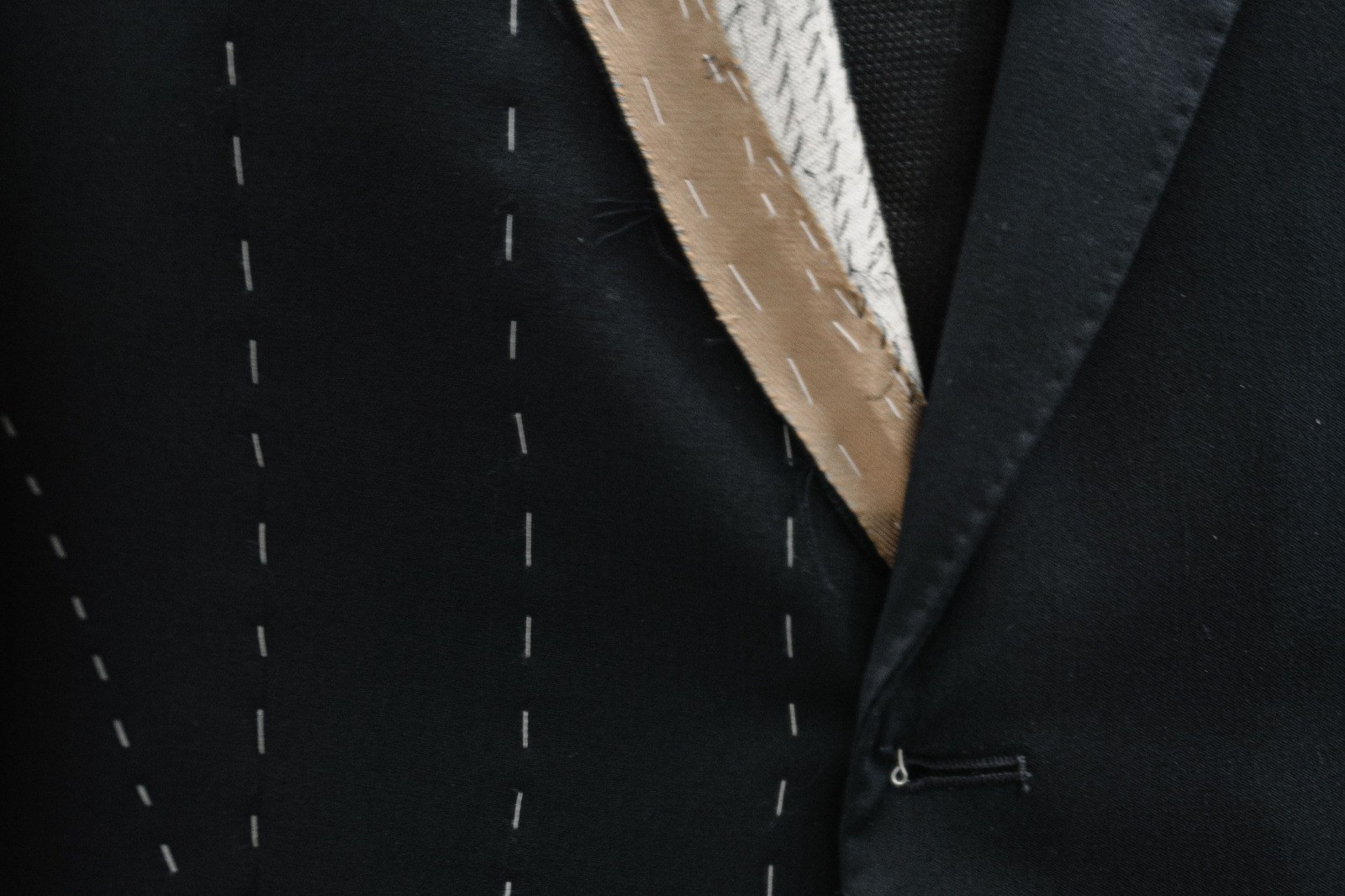
- Bespoke starts with a pattern made for you alone. As Robb Report and Permanent Style both define it, a tailor drafts a new pattern, usually beginning with a basted fitting held together by temporary stitches, rather than altering a factory block.
- Made-to-measure is not the same thing. It adjusts an existing pattern to your measurements and offers real choice in cloth and details, but it cannot fully account for posture, a dropped shoulder or the long curve of the back.
- Full, floating canvas is the construction that lasts. GQ, quoting New York tailor Leonard Logsdail, locates the difference between a good suit and a great one in the unseen handwork that shapes the chest and lapel.
- New York has true bench-made houses, and excellent custom workshops whose cutting is done overseas. The distinction is worth understanding before you book.
- Savile Row will come to you. Henry Poole, Huntsman and Anderson & Sheppard all maintain current United States programmes, by trunk show, a New York showroom, or both.
- For a first commission, keep the style quiet. Permanent Style’s advice remains the standard: a navy worsted, two-button or three-roll-two, two vents, no pleats, in a mid-weight cloth.
Bespoke, Made-to-Measure and Off-the-Rack
The language around custom clothing has become deliberately soft. “Bespoke,” “custom” and “made-to-measure” are often used as if they were equals. They are not. Permanent Style’s primer, still the clearest account in English, sets out three methods, and Robb Report’s May 2026 guide to New York tailors uses the same architecture.
Off-the-rack, or ready-to-wear, is cut from a designer’s standard size run. You can take it home the same day, and the best of it now uses better cloth, proper vents, even a half or full canvas. The limitation is structural: few men match a standard size in chest, shoulder, sleeve, waist and trouser length at once. Permanent Style’s advice is to have even a good ready-to-wear suit altered. GQ, in its 2024 “Ask a Tailor” series, adds a useful caution: a perfectly altered suit at a lower price will always look better than an expensive one that does not fit.
Made-to-measure begins with a pre-set block. A fitter takes your measurements and your choices of cloth, lining, lapel, buttons and vents; the factory adjusts that block and returns a nearly finished garment, typically after a few weeks. You gain a better sleeve and trouser length, a closer waist and a cloth that is actually yours. You do not gain a pattern that describes how you stand. Permanent Style is blunt: made-to-measure deals in relatively flat measurements. It can make the sleeves the right length, but it cannot fully record a stoop, a lower left shoulder or the S-curve of the back. In many shops the fitting is also done by a salesman, not a cutter.
Bespoke, or bench-made work, starts somewhere else. The cutter takes extensive measurements and notes on posture, drafts a unique paper pattern, cuts the cloth from that pattern, and develops the suit through several fittings, usually beginning with a basted try-on whose seams are only temporarily sewn. Huntsman, on its own site, describes up to twenty-eight measurements, a unique paper pattern, up to eighty hours of handwork and a minimum of three fittings. With care, the house says, the garment is made to be worn for a lifetime. The advantages that cannot be added later are a pattern that already knows your shoulders, a full canvas that will take your shape, a cloth chosen by the metre, and a garment that can be recut as your body changes. The costs are time, typically two to three months for a first suit, and the discipline to keep that first order simple.
| Off-the-rack | Made-to-measure | Bespoke | |
|---|---|---|---|
| Pattern | Standard graded sizes | Existing block adjusted to your measurements | Unique pattern drafted for you |
| Fittings | Try-on in the shop, then alterations | Usually one measuring session and a final fit | Several, often starting with a basted fitting |
| Construction | Often fused; the best are half- or full-canvas | Half- or full-canvas is widely available | Full canvas and a high degree of handwork, at the serious houses |
| Timing | Same day, plus alterations | Often about three to six weeks | Commonly two to three months or more for a first suit |
| What you gain | Immediacy and, at the top end, excellent cloth | Your measurements, your cloth, your details | A pattern, a fit that can handle posture, and a garment built to last |
Original article: Permanent Style
Original article: Robb Report
Full Canvas and Why a Bespoke Jacket Ages Well
Fit is the first reason to go to a tailor. Construction is the reason the suit is still beautiful in ten years. In GQ’s guide to canvassing, Logsdail, speaking from more than fifty years in the trade, compares a jacket to a building: it is only as good as its foundations, and those foundations are the canvas and the hand-stitching that shape the collar and the chest. “The secret,” he says, “is in the work you don’t see.”
A full, or floating, canvas is a layer of haircloth, cotton or felt, stitched rather than glued through the front of the jacket, from the shoulder and lapel down through the chest. It gives the lapel its roll, lets the coat move with you, and, over time, takes the shape of the wearer. A cheap jacket fuses that layer with adhesive. The shortcut is stiff, less breathable and, as the glue ages or meets humidity, prone to bubbling along the lapels. Half-canvas, which combines a stitched chest with a fused lower front, is a respectable middle point, but it is not the same as a fully canvassed coat. This is also why a serious bespoke suit can be the more rational long-term garment: the pattern can be used again, the canvas continues to settle, and a competent tailor can adjust the waist or the trousers because the coat was built to be lived in.
Original article: GQ
New York’s High-End Houses
Leonard Logsdail
If there is a living definition of New York bespoke, it is Leonard Logsdail. London-born and Savile Row-trained, he opened his midtown atelier in 1991 and still works in a way that has become rare: he takes the measurements, drafts the paper pattern and cuts the cloth himself. Robb Report, in its May 2026 survey, notes that the garments are then made locally by a single jacket maker, a trouser maker and a buttonhole finisher, so that only four people touch the suit. A separate made-to-measure line is produced in Canada.
Menswear historian Bruce Boyer, speaking to Esquire, called Logsdail “the best tailor in the country” and “a true bench-made tailor,” and described the cut as the meeting point of a structured British garment and the softer Ivy League shoulder. The atelier is at 9 East 53rd Street, fourth floor. In a 2021 interview with Voyage Austin, Logsdail listed starting prices of $8,000 for a full bespoke two-piece, $9,800 for a three-piece, $4,000 for a made-to-measure two-piece and $5,000 for a made-to-measure three-piece. Those figures are several years old and should be confirmed at the appointment.
Original article: Esquire
Alan Flusser Custom
Alan Flusser developed, over four decades, a distinctly American “updated drape”: a soft, natural shoulder, a fuller chest and a clean, tapered waist, including the wardrobe for Gordon Gekko in Wall Street. The business, now at 3 East 48th Street, passed in 2020 to long-serving associate Jonathan Sigmon, and Robb Report is clear that the house style remains. The highest level, Heritage, is handmade in New York City; Gentry and Club use varying balances of hand and machine work. Current starting prices are not published in the sources reviewed for this guide.
Original article: Robb Report
Michael Andrews Bespoke
Michael Andrews Bespoke, with appointment-only showrooms in NoHo at 2 Great Jones Alley and in Midtown at 9 East 53rd Street, offers a wide brief: suits, custom jeans and knitwear, with styling left largely in the client’s hands rather than in a fixed house cut. Robb Report explains how that range is possible: the firm owns a workshop overseas. By the strictest definition, in which the cutter who measures you also oversees the pattern and the make in the same city, this is high-level custom rather than fully local bespoke. The fittings can still be thorough and the cloth excellent. You should simply know where the garment is cut and made.
Paul Stuart: made-to-measure, read carefully
Paul Stuart, on Madison Avenue at 45th Street, with further stores in Chicago, Washington and Southampton, is one of America’s most serious menswear houses, and its made-to-measure programme is the right comparison for a man who wants a Paul Stuart shoulder without a pattern drafted from scratch. According to the house, you select a fit; the existing pattern is then tailored to your specifications, including cloth, lining, lapel, buttons, vents, pockets and the cut of the trouser. Most items take three to six weeks. Suits and jackets are available in full canvas unless you choose an unconstructed jacket, in cloths from mills such as Holland & Sherry, Loro Piana, Vitale Barberis Canonico and Solbiati.
The same page also uses the word “Bespoke” for a service that adds hand finishing. Read that in context: the process Paul Stuart describes in detail is made-to-measure, an existing pattern adjusted, which can still be an excellent way to own a full-canvas navy suit. It is not the same as sitting with Logsdail while he cuts a pattern on paper. Current made-to-measure prices are not published. As a ready-to-wear reference, the house’s Classic Navy Wool Suit is listed at $2,895: Italian-woven worsted, full canvas, two-button, notch lapel, double vents, horn buttons, flat-front trousers, made in Canada.
Original article: Paul Stuart
Savile Row in America: Henry Poole, Huntsman and Anderson & Sheppard
For many American clients, the most practical way to commission a London suit is not to wait for a week in Mayfair. The great Row houses have built a United States circuit, and in 2026 that circuit is still active.
Huntsman is the only one of the three with a permanent New York home, at 130 West 57th Street. Robb Report notes that it was the first Savile Row house to establish such a presence, in 2016, and that an in-house cutter takes measurements and conducts fittings before the garments are made in London. The house style is a structured, equestrian-derived silhouette with a firm shoulder, a defined waist and, classically, a single button, the cut associated with Colin Hammick. The official site states that bespoke starts from £7,500, with a minimum of three fittings. The New York team, including U.S. director Ed Turco and senior cutter Thomas-Pierre Carr, also represents the firm at trunk shows across the country.
Henry Poole & Co. is often credited as the founder of the Row and as the house that gave the world the dinner jacket. Luxury London, in a guide updated in December 2025, describes a process that usually takes up to twelve weeks and a house obsession with balance: buttons placed to moderate the torso, trousers cut on the waist rather than the hips. New customers need two to three fittings, on Savile Row or at a later trunk show, not necessarily in the city where the order was placed. The work is confirmed, cut and made in London. Poole’s own 2026 calendar includes New York, Boston, Chicago, Washington, Atlanta, New Orleans, Austin, Los Angeles, San Francisco and Seattle, among other stops. Luxury London lists a two-piece from £6,500.
Anderson & Sheppard remains the great house of the English drape: a soft, barely padded shoulder, a high, small armhole, a full chest and a distinctive vertical hang. Founded in 1906, it holds a Royal Warrant as tailors to the King, and Luxury London lists a two-piece from £6,834. Appointments in 2026 have included New York at The Carlyle, as well as Los Angeles, Dallas, San Francisco and Chicago. Dates should be confirmed directly; the point is that the drape cut is available to an American client who would rather not spend a season in London.
A trunk show is not a lesser version of the Savile Row appointment if the cutter is in the room and the garment will be made in the same workrooms. Book early, diary the return visits, and be prepared to have a later fitting in a different city if that is more convenient, as Henry Poole expressly allows.
Original article: Huntsman
Original article: Henry Poole
Original article: Luxury London
How the Houses Compare
| House | Where you are seen | What the work is | House style | Time and fittings, as stated | Price, as stated by the source |
|---|---|---|---|---|---|
| Leonard Logsdail | 9 East 53rd Street, New York | Local bespoke; MTM made in Canada | Soft meeting of Savile Row and American Ivy | Confirm at the atelier | 2021 interview: bespoke two-piece from $8,000; three-piece from $9,800; MTM two-piece from $4,000 |
| Alan Flusser Custom | 3 East 48th Street, New York | Heritage handmade in New York; Gentry and Club at lower levels of handwork | Updated American drape | Confirm at the atelier | Not published in the sources reviewed |
| Michael Andrews Bespoke | NoHo and Midtown | Custom work with an overseas workshop | No single house cut | Confirm at the showroom | Not published by the house in the sources reviewed |
| Paul Stuart | Madison Avenue and other U.S. stores | Made-to-measure from an existing pattern; full canvas available | Classic American house style | Typically 3–6 weeks | Ready-to-wear Classic Navy Wool Suit listed at $2,895; MTM prices not published |
| Huntsman | West 57th Street and U.S. trunk shows | Pattern and fittings in the U.S.; make in London | Structured one-button English cut | At least three fittings; up to 28 measurements | Bespoke from £7,500, according to the house |
| Henry Poole | U.S. trunk shows; make on Savile Row | Full Savile Row bespoke | Balanced British cut; the house that developed the dinner jacket | Two to three fittings for new clients; typically up to 12 weeks | From £6,500 for a two-piece, according to Luxury London (updated December 2025) |
| Anderson & Sheppard | U.S. trunk shows, including New York | Full Savile Row bespoke | English drape: soft shoulder, full chest | Confirm with the house | From £6,834 for a two-piece, according to Luxury London |
These figures are starting points, almost always for a two-piece in a standard cloth, and they move with a cashmere, a waistcoat or a more elaborate lining. Ask for the current opening cloth price before the swatch books come out.
How to Commission a First Bespoke Suit
The first suit is not the moment to experiment. Simon Crompton, writing for Permanent Style, still gives the most reliable brief. Start in navy. Mid-grey may flatter more complexions, but navy is the more versatile cloth: it works in an office, it dresses down with a knit tie or an open collar, and, in a dark enough shade, it can stand in for evening wear when a dinner jacket is not required. He would leave the waistcoat for later, unless you are set on a three-piece, and perhaps ask the tailor to put aside a waistcoat-length of the same cloth.
The cut should be equally restrained. A mid-weight worsted of about 370 to 440 grams per square metre, with a little surface interest if you want it, is enough personality for a first garment. Two buttons, or a three-roll-two, two vents, no pleats, no turn-ups. Years later, the same reader who had followed that advice wrote back to say that a plain single-breasted navy suit had been the correct decision, and that the only real mistake had been asking for the waist too tight. A first bespoke suit should have enough room to be lived in. A tailor can always take a garment in. Adding cloth that was never there is another matter.
Be prepared to talk about where you will wear the suit, how much you sit, and whether one shoulder sits lower than the other. If you are visiting a house with a strong signature, such as Huntsman’s one-button or Anderson & Sheppard’s drape, try that signature before you ask them to abandon it. You are paying, in part, for a cut they know how to make. Leave bright linings and extreme lapel widths for a second commission, when the pattern already exists. Plan for months rather than weeks, and diary the return fittings when you place the order, especially if you are using a trunk show.
Original article: Permanent Style
Timeless Style: Navy, Charcoal, Lapels and Buttons
A tailor can make almost anything. That is not an argument for asking him to. The suits that earn their keep are the ones you reach for without thinking: a dark navy worsted for most of the year, a charcoal or mid-grey for days when navy would be too familiar, and, when the climate asks for it, a heavier flannel in winter or a tropical wool in summer. Pattern, if you want it at all on a first suit, should be a faint stripe or a quiet check that disappears at two metres.
Lapels follow the coat. A single-breasted business jacket is at home with a notch lapel of moderate width, in proportion to your chest and to the fashion of no particular year. Peak lapels belong naturally on a double-breasted coat and on a dinner jacket; they can be used on a single-breasted coat, but they make a stronger statement. Shawl collars remain evening clothes. Button stance should be calm: two buttons, or the soft three-roll-two of a more American or drapey coat, will still look correct in ten years. One-button is a house signature at Huntsman and should be worn as such, not as a default.
Buttons deserve more attention than they usually receive. Natural horn, corozo or mother-of-pearl age with the cloth; plastic is the mark of a garment that was finished in a hurry. Two rear vents are the most useful arrangement for sitting and for walking; a ventless skirt is a more formal, slightly older line and can be less comfortable in a car or at a desk. None of these choices is dramatic. That is the point. Bespoke is the method. Timelessness is the brief.
How to Care for a Suit That Was Built to Last
A canvassed jacket should not be treated like a washable uniform. Permanent Style, in a series made with Richard Anderson, reduces daily care to a few habits. Hang the coat on a wide, shaped wooden hanger that supports the shoulder, never on wire. Brush it after wearing, with the grain of the cloth, to lift dust and settle the nap. Give it a day’s rest on the hanger, with a little air, before you wear it again. Steam sparingly to relax creases; do not soak the cloth.
Dry cleaning should be occasional, not routine. Crompton has said he would normally send a suit once a year or once every two years, depending on wear and on stains, and that the real risk is often the pressing that follows the chemicals. When a suit does need a clean, take it to someone who will hand-press a canvassed coat, ideally a presser your tailor trusts. Frequent machine pressing can flatten the very canvas you paid for. Trousers benefit from the same restraint: a proper hanger, a brush, and a hem that just breaks on the instep, so the cloth does not sit in a heap on the shoe and wear itself out.
Original article: Permanent Style
Product Picks: A Full-Canvas Navy Suit and a Proper Clothes Brush
Paul Stuart Classic Navy Wool Suit — A ready-to-wear reference for the man who wants a calm, full-canvas navy suit from an American house while he waits for a bespoke commission, or who has decided that made-to-measure or ready-to-wear is the more honest choice for now. The page lists Italian-woven worsted wool, full-canvas construction, a single-breasted two-button front, a notch lapel, flap pockets, double vents, real horn buttons and flat-front trousers, made in Canada. Listed at $2,895.00.
Kent Black Boar Bristle Two Toned Cherrywood Clothes Brush — The daily tool that keeps a canvassed jacket out of the dry cleaner. Made in England with pure black natural boar bristle in a two-tone cherrywood and beechwood back, about 27 centimetres long, and sold in the United States by Kent’s authorized distributor. Listed at $88.00.
FAQ: Bespoke Men’s Suits
What is the difference between bespoke and made-to-measure?
Bespoke means a unique pattern is drafted for you and the suit is developed through several fittings, usually including a basted try-on. Made-to-measure adjusts an existing factory or house pattern to your measurements and details. Both can be excellent; only bespoke starts from a pattern that did not exist before you walked in.
How much does a bespoke suit cost in the United States?
It depends on the house and the cloth, and many ateliers do not publish a current list. Figures that have been stated publicly include Leonard Logsdail’s 2021 starting prices of $8,000 for a bespoke two-piece, Huntsman’s current opening price of £7,500, and, for Savile Row houses that visit the United States, Luxury London’s figures of £6,500 at Henry Poole and £6,834 at Anderson & Sheppard. Always confirm the current opening cloth before you order.
How long does a first bespoke suit take?
Plan for months, not days. Henry Poole describes a journey of up to twelve weeks with two or three fittings for new customers. Huntsman requires a minimum of three fittings. A New York bench-made commission will have its own calendar, but a first pattern always takes longer than a later repeat order.
Is a Savile Row trunk show real bespoke?
If the cutter measures you, a unique pattern is made, the garment is cut and sewn in the house’s London workrooms, and you return for fittings, the method is bespoke. The hotel suite is simply where the house is seeing American clients that week. Check who will be in the room and where the suit will be made.
What should I order as a first suit?
A plain navy worsted, single-breasted, two-button or three-roll-two, with two vents and a mid-weight cloth, in a cut the house already knows how to make. Leave loud linings, extreme silhouettes and a three-piece for later.
Do I still need a tailor if I buy off-the-rack?
Yes, at least for alterations. Even a full-canvas ready-to-wear suit, such as a carefully chosen navy from a house like Paul Stuart, will look sharper when the sleeve length, the jacket waist and the trouser break are set for you. Off-the-rack becomes a problem only when the shoulder and the chest, which are hard to change, are wrong from the start.