
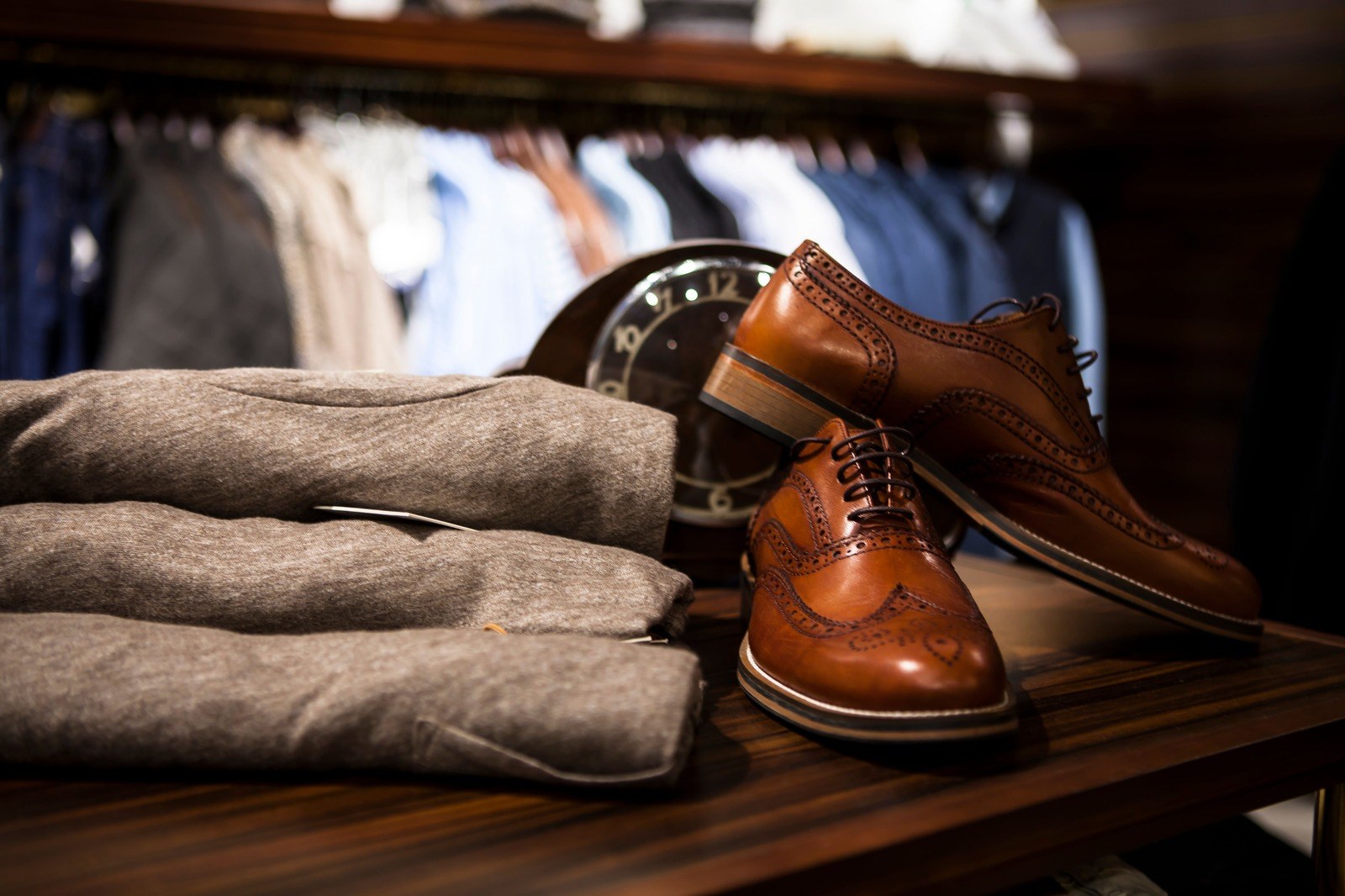
A great suit can still be let down by the wrong pair of shoes. For the elegant man, Italian bespoke leather shoes remain one of the last true workshops of luxury: a wooden last carved for his feet, a hide chosen by hand, and months of fittings before the first proper walk down the street. This guide sets out the Italian houses still doing that work, the cities worth traveling to, how a bespoke pair differs from ready-to-wear, and how an American can order without guessing from a lookbook.
The names below have been checked against current maker sites and recent reporting from Permanent Style, The Shoe Snob, Robb Report and Women’s Wear Daily. Prices appear only as those sources state them, and they do change. English houses such as Edward Green or Gaziano & Girling, and the Romanian workshop Saint Crispin’s, are mentioned only for comparison. The itinerary itself is Italian.
Key takeaways
- Bespoke means a unique last. Measurements, a wooden last made for your feet, trial shoes and fittings that can stretch over many months. Made-to-order usually adapts an existing last. Ready-to-wear comes in standard sizes.
- Florence, Rome, Naples, Bologna and the Marche are the map. Stefano Bemer, Mario Bemer and Roberto Ugolini work in Florence. Rome holds the Gatto lineage at Stivaleria Mercurio. Antonio Meccariello is based near Naples. Enzo Bonafè works in Bologna. Silvano Lattanzi and Santoni belong to the Marche. Riccardo Freccia Bestetti works in Vigevano, near Milan.
- Published starting prices sit well into four figures. Stefano Bemer lists Sixpence Bespoke from 4,700 US dollars plus a one-time 700 dollar last fee. Antonio Meccariello lists Principes from 3,700 euros and Imperator from 5,400 euros. Permanent Style reported Roberto Ugolini shoes from 2,300 euros excluding VAT in 2023. Santoni’s fully bespoke “One of a Kind” programme starts at 8,000 US dollars for the first pair, according to WWD in April 2026.
- Americans do not always have to fly first. Stefano Bemer has a New York salon on Park Avenue. Ugolini has held New York trunk shows. Santoni offers personalization in selected flagships and through trunk shows. A trip to the workshop is still the richest way to do it.
- Construction matters as much as the label. Hand-welted and Goodyear-welted shoes can be resoled for years. Blake is slimmer and lighter. Norvegese is a more robust, weather-minded stitch.
- Start with a dark, classic model. A black or dark brown cap-toe oxford, a sober derby, a dark loafer or a single monk will serve a wardrobe longer than a novelty last.
Bespoke, Made-to-Order and Ready-to-Wear
These three words are often used as if they meant the same thing. They do not.
Bespoke is the fullest service. The shoemaker traces and measures both feet, studies posture and any old pressure points, then carves a unique wooden last. A fitting shoe is used to correct that last before the final pair is built. Stefano Bemer calls this Sixpence Bespoke: a first fitting, a re-fitting three to six months later when leather and pattern are confirmed, and delivery another three to four months after that. Antonio Meccariello describes a custom last, a fitting shoe and, in his Imperator service, a wearable hand-welted test shoe before the finished pair is made.
Made-to-order starts from an existing last and model. You choose leather, colour, sole and sometimes a modest width or instep change. The shoe is made for you, but not around a new last from scratch. Enzo Bonafè’s MTO programme, as listed by The Noble Shoe, carries a 20 percent surcharge and a wait of 16 to 20 weeks. Santoni’s “One Yours” tier, reported by WWD in 2026, takes about 12 weeks and costs 30 percent more than the retail price of the base shoe.
Ready-to-wear is the finished shoe in a standard size run. In Italian luxury that can still mean serious handwork: Santoni paints and finishes by hand even when the pair is not a unique last, and Enzo Bonafè offers hand-welted ready-to-wear. It is often the right first step, because you can try the last before you spend months on a commission.
Edward Green of Northampton is the English ready-to-wear make many American enthusiasts already know. The Italian difference is usually in the last, the finishing, and a more chiseled toe or a deeper hand patina. Saint Crispin’s, often mentioned in the same conversations, is Romanian, and is known for handmade shoes on adjusted lasts rather than as an Italian house.
Original article: Stefano Bemer
Original article: Antonio Meccariello
Goodyear, Blake, Hand-Welted and Norvegese
Goodyear welted shoes have a leather welt stitched to a rib on the insole; the outsole is then stitched to that welt. The sole can be replaced without destroying the upper, which is why a well-made welted pair can be worn for decades. Robb Report, walking through a Santoni made-to-measure double monk, notes a Goodyear-welted sole and the luxury of time: the leather is left on the last for weeks before it is sewn.
Hand-welted work is the older, more laborious cousin. The welt is sewn by hand to the insole, without the machine gemming used in many factory Goodyear lines. The waist is often cleaner, and the shoe can still be resoled. The Shoe Snob has long pointed to Enzo Bonafè as a house that offers this construction in ready-to-wear. Meccariello describes his bespoke shoes as fully hand-welted.
Blake construction sews the upper, insole and outsole together from the inside of the shoe. The profile is slimmer and more flexible, which suits many Italian loafers and city oxfords. It is less straightforward to resole repeatedly, and it is not the first choice for heavy weather.
Norvegese wraps the upper under the shoe and stitches it so that water has a harder path in. Enzo Bonafè offers linear and chained norvegese constructions on The Noble Shoe’s made-to-order list, at a slightly higher starting price than hand-welted city shoes. It is the construction to discuss for a robust country oxford or a winter town shoe that still looks formal.
None of these methods replaces a good last. A poorly fitted hand-welted shoe will still hurt. Construction decides how the shoe wears, how it can be repaired, and how it looks at the waist and sole edge.
Original article: Robb Report
Original article: The Noble Shoe
Where to Travel in Italy
Florence is the most natural first journey. The city is compact, the workshops are visit-able, and Pitti Uomo already brings many of the same men to town twice a year. Stefano Bemer occupies a former chapel at Via San Niccolò 2. Roberto Ugolini keeps a smaller workshop; Permanent Style noted in March 2026 that visiting Florence for Pitti made the fittings practical. Mario Bemer, a founding member of Stefano Bemer who now works independently under his own name, also remains rooted in Florence.
Rome is the city of the old bootmakers. Among Italian enthusiasts, Angelo Gatto is spoken of as a legend. Permanent Style’s April 2026 Rome city guide describes Antonio Mercurio of Stivaleria Mercurio as Gatto’s trained heir. The father-and-son workshop is official bootmaker to the Carabinieri mounted regiment and to the Corazzieri honour guard of the President of the Republic. It sits in the barracks of the mounted cavalry and requires an appointment.
Naples, and the towns around Benevento, are the home ground of Antonio Meccariello. Bologna is the city of Enzo Bonafè, an easy train from Florence or Milan. Vigevano, about an hour from Milan, is where Riccardo Freccia Bestetti makes every pair in his own workshop.
The Marche, a few hours from Rome, is Italy’s great shoemaking countryside. Robb Report has called it the region behind many of the shoes men already own. Santoni’s factory and academy are in Corridonia. Silvano Lattanzi’s workshop is in Casette d’Ete, near Ancona. Nearby towns such as Montegranaro and Civitanova Marche are dense with last-makers and factories, including respected ready-to-wear names such as Silvano Sassetti. This is a planned visit, often through a brand appointment, not a stroll between two Florentine streets.
Original article: Permanent Style, The shoemakers I have known
Original article: Permanent Style, Rome city guide
Original article: Robb Report, Le Marche
The Italian Houses Worth Knowing
Stefano Bemer and Mario Bemer, Florence
Stefano Bemer opened in 1983. After the founder’s death in 2012, Tommaso Melani, then director of the Scuola del Cuoio, took the house forward in the chapel on Via San Niccolò. Melani died in May 2026, a loss recorded by Shoegazing; the official site still lists Florence, a New York salon at 475 Park Avenue, and Seoul. Sixpence Bespoke “currently starts at 4700 USD, plus 700 USD for the preparation of the last,” a one-time fee for a last that can be used and modified for a lifetime. Permanent Style’s Simon Crompton, who had three pairs, has written warmly about the shoes while noting, in his case, a tendency toward a tight fit — and that saying how you want a shoe to feel is part of the work.
Mario Bemer is a different maker. Folio YVR, writing in March 2026, describes him as a founding member of Stefano Bemer who now works solely under his own name, producing about 200 pairs a year by hand in Florence, with no diffusion line. Made-to-order adjustments take 90 to 120 days; full bespoke runs from five to nine months. No public price was given in that report. He has already held trunk-show appointments in North America.
Original article: Stefano Bemer
Original article: Shoegazing
Original article: FOLIO.YVR
Roberto Ugolini, Florence, and Antonio Meccariello, Naples
Permanent Style’s 2023 review of an Ugolini suede chukka recorded shoes starting at 2,300 euros and those boots at 2,400 euros, both excluding VAT. In 2026 Crompton again reported a good fit and noted that Ugolini travels to New York, though not to London. The same review has a lesson for every house in this guide: the result improved once he was specific about where shoes had hurt him, and once he chose a model he had already seen in the workshop, from an actual hide.
Antonio Meccariello is known for sharp lasts and rich patinas. His official page lists Bespoke Principes, with a fitting shoe and the final pair, from 3,700 euros, and Bespoke Imperator, with a fitting shoe, a hand-welted test shoe worn for a few weeks, and the final pair, from 5,400 euros. Leathers come from houses such as Annonay and Du Puy in France, Freudenberg in Germany and Ilcea in Italy. The maker himself says that visiting Italy is the most immersive way to do it.
Original article: Permanent Style, Ugolini review
Original article: Meccariello Shoes
Enzo Bonafè, Bologna, and Riccardo Freccia Bestetti, Vigevano
Enzo Bonafè is the Bologna workshop for classical Italian shape and serious construction without fashion-house theatre. The Shoe Snob called the hand-welted shoes one of the stronger value propositions in the industry and listed ready-to-wear pairs at prices under 800 US dollars, as then shown on the product pages. The Noble Shoe’s made-to-order table lists Blake or moccasin shoes at 560 euros, hand-welted at 675, linear norvegese at 685 and chained norvegese at 720, before a 20 percent surcharge, with 16 to 20 weeks of production. A custom last is listed at 400 euros. Reconfirm before you order.
Riccardo Freccia Bestetti makes every pair in Vigevano, at the more sculptural end of Italian elegance. Parisian Gentleman reported Blake ready-to-wear at 600 euros, hand-welted ready-to-wear at 900 euros, hand-welted MTO at 1,200 euros, a “Novecento” almost-bespoke line with trial shoes at 1,650 euros, and traditional bespoke at around 3,000 euros, with only about 20 fully bespoke pairs a year. Those figures belong to that report, not to a live price list. For a quiet cap-toe under a navy suit, look first at Bemer, Ugolini or Bonafè. For a painter’s finish and a strong waist, Vigevano is the detour.
Original article: The Shoe Snob
Original article: The Noble Shoe
Original article: Parisian Gentleman
Rome’s Gatto Line, Silvano Lattanzi and Santoni
Permanent Style’s 2026 Rome guide recommends Stivaleria Mercurio, run by Antonio and Lorenzo Mercurio. Antonio was trained by his father and by Angelo Gatto. A long-time client on the same site said Mercurio was the first shoemaker he had found who combined a deep knowledge of the foot and ankle with shoes that also look right. No current public price list was found for this guide; the conversation starts with an appointment.
Silvano Lattanzi, one of the most storied Italian names, works in Casette d’Ete in the Marche. The official site presents a high custom-made programme; a reliable current starting price was not listed on the pages checked for this article, so none is quoted here. The same region is home to Santoni and to quieter ready-to-wear names such as Silvano Sassetti.
Santoni sits between workshop culture and a modern luxury house. Andrea Santoni founded the firm in a garage in 1975. Robb Report’s 2024 visit to Corridonia found about 600 artisans, a funded Accademia dell’Eccellenza, and the signature velatura painting of uppers in as many as 15 layers. Made-to-measure shoes in that report were “100 percent handmade,” at 7,830 US dollars for the first pair and 4,350 dollars for the next. In April 2026, WWD reported a new “One of One” programme: fully bespoke “One of a Kind” starts at 8,000 dollars for the first pair and 5,600 dollars for additional pairs, with eight foot measurements, a named wooden last, two fittings and a wait of 16 to 20 weeks, offered in selected flagships and through trunk shows.
Original article: Permanent Style, Rome
Original article: Robb Report, Santoni
Original article: WWD
How Americans Order
You do not have to invent a sabbatical in Tuscany to start, though that remains the most pleasurable way. Stefano Bemer lists a New York salon at 475 Park Avenue, the rare Italian house with a permanent American room for fittings. Roberto Ugolini has taken appointments in New York, including trunk shows at J. Mueser. Santoni’s 2026 personalization programme is available through trunk shows as well as flagships. Mario Bemer has already measured clients on a North American trunk-show circuit.
Book a slot, arrive with the shoes you already wear, explain where they fail you, look at lasts and hides in person, and leave a deposit. Trial shoes may be shipped later, or you may wait for the maker’s next visit. Full bespoke still wants at least one more encounter.
If you travel, plan backwards from the fittings, not from the flights. Write to the workshop before you buy the ticket. Bring a pair that almost works, a pair that fails, and the socks you actually wear with a suit. In Florence you can often see more than one maker in a few days. Rome, Naples and Bologna each deserve their own appointment. The Marche is a hired-car or brand-arranged visit from Ancona, and it is worth it if Santoni or Lattanzi is the house you want.
What to Commission, and How to Care for It
The first pair should be the pair you will actually wear. For a man who already has a navy or charcoal suit, that is usually a dark brown or black cap-toe oxford, or a close wholecut if the workshop is known for a clean one-piece vamp. The oxford’s closed lacing is the formal line. The derby, with open lacing, is the more forgiving everyday shoe, and often the better first last if your instep is high. The loafer — penny, tassel or a sober horsebit — should still be dark: black, dark brown, burgundy or a deep navy. A single or double monk is the fourth classic, excellent in a rich but conservative brown.
Leave pale patinas, extreme elongated toes and exotic skins until the last is proven. Bespoke gets better on the second and third pair, once the last has been worn and corrected.
Keep cedar trees in the shoes whenever they are off the foot. Never wear the same pair two days running. Clean with a soft brush, feed calf with a thin cream, and raise a shine with hard wax on the toe and heel, not a caked waist. Keep them away from radiators and from the dry blast of a car heater. If they are wet, let them come back slowly at room temperature. Welted and hand-welted pairs should go to a proper cobbler, or back to the workshop, for a first resole before the welt itself is worn through.
A Quick Comparison
| House | City or district | Service | Price as published | Typical wait |
|---|---|---|---|---|
| Stefano Bemer | Florence; also New York | Sixpence Bespoke | From 4,700 USD, plus 700 USD one-time last fee (official site) | Re-fitting 3–6 months later, then 3–4 months to delivery |
| Mario Bemer | Florence | MTO and full bespoke | Not publicly listed in the source used here | MTO 90–120 days; bespoke 5–9 months |
| Roberto Ugolini | Florence; travels to New York | Bespoke | Shoes from 2,300 euros, boots 2,400 euros, excl. VAT (Permanent Style, 2023) | Fittings around travel and visits to Florence |
| Antonio Meccariello | Naples area | Bespoke Principes and Imperator | From 3,700 euros and 5,400 euros (official site) | Last, fitting shoe, then final pair; Imperator adds a test shoe |
| Enzo Bonafè | Bologna | RTW, MTO, optional custom last | MTO base from 560–720 euros plus 20 percent (The Noble Shoe); custom last 400 euros | MTO 16–20 weeks |
| Freccia Bestetti | Vigevano | RTW, MTO, Novecento, bespoke | Bespoke around 3,000 euros in a Parisian Gentleman profile | Novecento has been described as 6–9 months |
| Stivaleria Mercurio | Rome | Bespoke, Gatto lineage | No public figure found for this article | By appointment at the workshop |
| Santoni | Corridonia, Marche | MTM and “One of a Kind” bespoke | MTM 7,830 USD first pair, 4,350 USD next (Robb Report, 2024); bespoke from 8,000 and 5,600 USD (WWD, 2026) | Bespoke 16–20 weeks, two fittings |
FAQ: Italian Bespoke Leather Shoes
What is the difference between bespoke and made-to-order shoes?
Bespoke starts with a last made for your feet and is corrected through fittings, often with a trial shoe. Made-to-order usually keeps a house last and model, then changes leather, colour, sole and perhaps a modest fit detail. Both can be handmade in Italy. Only bespoke is built around a unique last from the beginning.
How long does a pair of Italian bespoke shoes take?
It is measured in months, not weeks. Stefano Bemer describes a re-fitting three to six months after the first visit, then another three to four months before delivery. Mario Bemer’s full bespoke programme has been reported at five to nine months. Santoni’s fully bespoke service is listed at 16 to 20 weeks with two fittings. A trunk-show client should add the time between the maker’s visits.
How much do Italian bespoke shoes cost?
Only the figures the houses and serious reports have published should be trusted, and even those should be reconfirmed. At the time of writing, Stefano Bemer lists Sixpence Bespoke from 4,700 US dollars plus 700 dollars for the last; Meccariello lists 3,700 and 5,400 euros; Santoni’s top bespoke tier starts at 8,000 US dollars for the first pair, according to WWD.
Can an American order without going to Italy?
Yes, in several cases. Stefano Bemer has a New York salon at 475 Park Avenue. Ugolini has held New York trunk shows. Santoni and Mario Bemer have used trunk shows in North America. Meccariello also describes remote measurements and 3D scans. The first fitting is still better in person, and the workshop visit remains the surest way to choose a last and a hide.
Which style should I commission first?
A dark cap-toe oxford or a dark brown derby is the most useful first pair, followed by a dark loafer if your life is more informal. Keep the colour conservative until the last is proven. A monk strap or a suede boot is a fine second or third commission, not the experiment on which the last is born.
Are handmade ready-to-wear Italian shoes worth buying first?
They often are. A Santoni, a Silvano Sassetti or an Enzo Bonafè ready-to-wear pair teaches you the last, the construction and the finishing. Many men are better served by two excellent ready-to-wear pairs and one later bespoke last than by a rushed first commission in a style they have never worn.
The right Italian shoe does not announce itself from across the room. It holds a line, takes a shine, and, if the last is honest, disappears into the walk. That is the standard worth traveling for.